- Welcome To Changzhou Huarui Welding & Cutting Machinery Co., Ltd.!
- About Huarui | Inquiry Form | Contact Us |
 中文
中文
中文
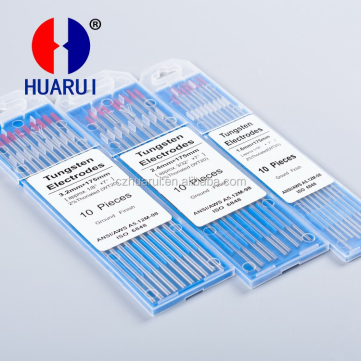
In the process of welding, the shape of tungsten needle end of tungsten electrode has a very important effect on the quality of welding
Good end forming can ensure the stability of arc, prolong the service life of tungsten needle and improve the welding quality, otherwise it will cause unstable arc drift, easy to form welding defects..
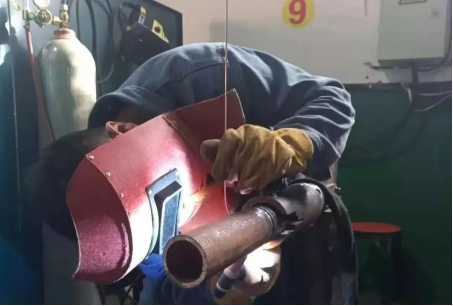
Many of our welder brothers polish tungsten needle on the grinder, manual operation is not only difficult to ensure the end shape, and tungsten is a heavy metal, inhalation causes internal radiation!
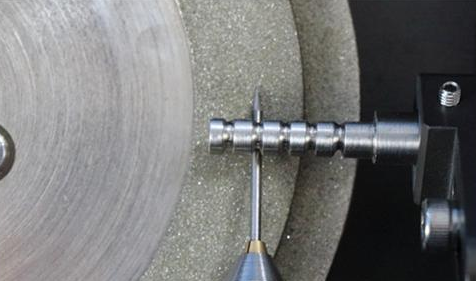
Then is there a simple operation convenient to carry, and harm to the human body small sharpening machine?
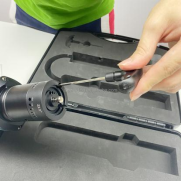
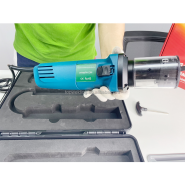
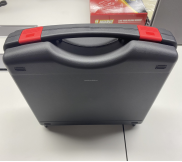
Changzhou huarui welding&cutting Machinery Co., Ltd. according to the demand of the market and the majority of welder friends to launch a handheld tungsten needle sharpening machine!
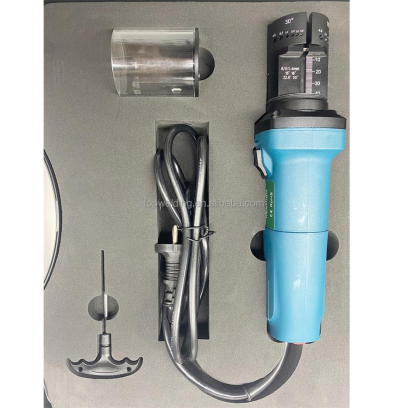
Smaller size, easier operation, making tungsten needle sharpening as easy as sharpening a pencil.
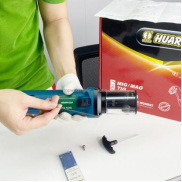
Product link :
HUARUI alibaba shop:
https://topwelding.en.alibaba.com
https://czhuarui.en.alibaba.com
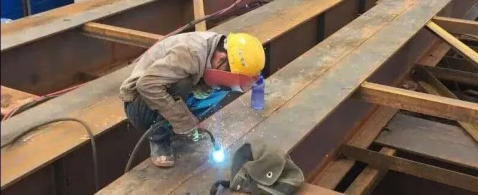
Gas welding machine is a machine, electricity, gas trinity equipment, in the use of the process, for its problems should be understood, analyzed and solved from three aspects. Generally speaking, can not welding for circuit fault, bad welding for mechanical fault, welding is not good for process problems or protection gas impurity, gas path problems and other reasons. This is a reflection of experience, and the latter two account for 90% of the questions.
Users in the encounter of arc instability, welding effect is not good, air holes and other abnormal phenomenon, do not prematurely conclude that the failure of CO2 welding machine, the occurrence of the above problems or abnormal phenomenon, often have the following factors: Such as blown fuse, loose fastening part, forget switch, improper parameter adjustment, cable break, gas hose crack leakage, CO2 welding gun damage, these faults and abnormal phenomena can be eliminated by the user. If the circuit fault cannot be removed, you can go to the local sales outlets for after-sales treatment.
Next, we will explain to you what problems are easy to encounter in the process of gas welding, what defects are easy to produce in the weld and what preventive measures.
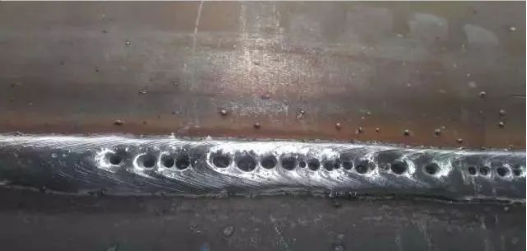
Welding pore
Cause
1. Gas regulator flowmeter is damaged or frozen and blocked;
2. The set value of gas flow does not match;
3. Failure of the welding gun body;
4, solenoid valve failure;
5, the surface of the base material has oil, dirt, rust, paint film or welding wire extended too long;
6. Rust or other quality defects on the surface of the welding wire.
Preventive measures
1. Replace the flowmeter or heat the gas flowmeter;
2, adjust to the appropriate airflow value;
3. Replace the welding gun;
4. Replace the solenoid valve;
5. Clean the surface of the base metal, and adjust the length of the welding wire to the appropriate length;
6. Replace the welding wire.
The welding current is unstable
cause
1, the input and output cables are too long and too fine to cause current instability;
2, the wire feeding mechanism has damage and wear phenomenon;
3. Aging of wire hose;
4, welding gun head wear, damage phenomenon;
5, conductive nozzle wear serious (or aperture wrong).
Preventive measures
1. If the input and output cables are too long, use cables with larger diameters;
2. Replace the new wire feeding mechanism;
3. Replace the new wire hose;
4. Replace the welding gun head;
5. Replace the new conductive nozzle.
The wire feed is unstable
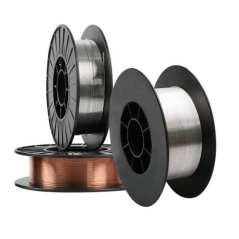
cause
1. Large resistance of wire hose;
2. Improper adjustment of wire feeding pressure;
3, poor welding wire, welding wire cross, uneven diameter or hard bending;
4, the size of the conductive nozzle is wrong or the inner diameter is too small;
5. There is dirt in the wire feeding wheel;
6. The bending radius of the welding torch cable is small, and the bending radius should be greater than 300mm.
Preventive measures
1. Clean the wire hose with compressed air or replace the wire hose;
2, adjust the pressure arm, select the appropriate wire feeding pressure;
3, choose good quality welding wire;
4. Select a conductive nozzle matching the diameter of the welding wire;
5. Clean or replace the wire feeding wheel in time;
6. Make the torch cable straight as far as possible during welding.
Arc instability
cause
1. The output voltage is unstable;
2, the wire is not stable;
3. Poor quality of welding wire;
Preventive measures
1, try to keep the dry elongation of welding wire unchanged;
2. Check wire feeding during welding to ensure smooth wire feeding;
3. Select welding wire with good quality;
The welding wire adheres to the conductive nozzle
cause
1, the length of the welding wire is too small;
2, the gas flow is too small;
3. The spatter in the nozzle is not removed in time;
4, welding parameters do not match.
Preventive measures
1, choose the appropriate dry elongation;
2. Adjust the appropriate gas flow rate;
3. Clean the spatter in the nozzle in time;
4. Select appropriate and matched welding parameters.
Welding splash
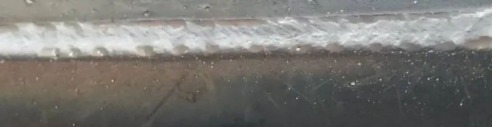
cause
1. Welding current does not match with voltage;
2, the inductance does not match, the larger the current is, the larger the inductance is;
3. The welding wire is extended too long or too short;
4. There are rust and oil stains on the surface of base metal and welding wire.
Preventive measures
1.adjust the matching current and voltage value;
2. adjust the appropriate inductance value according to the current;
3. choose the appropriate dry elongation;
4.Clean the surface of the base metal or replace the welding wire.
Crack in weld
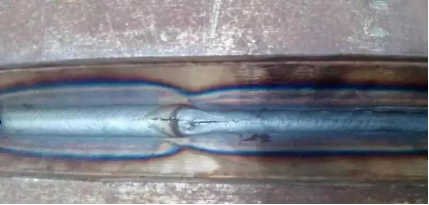
cause
1. Welding wire or workpiece is not clean;
2. welding wire quality is not good;
3. the first welding seam is too thin;
4. The current and penetration are too large.
Preventive measures
1. Replace the new welding wire and clean the workpiece surface;
2. Select welding wire with good quality;
3. increase the width of the pass;
4. adjust the welding specification, control the penetration.
A serpentine pass appears during welding 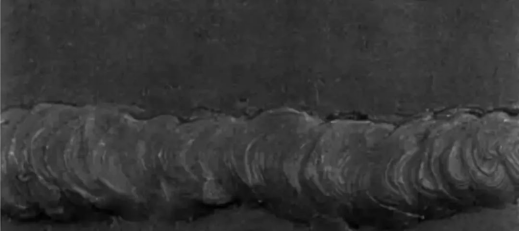
cause
1, conductive nozzle wear serious;
2. The conductive nozzle is loose;
3. The mouth of the wire feeding tube is too large;
4, dry elongation of welding wire is too large;
5, welding wire alignment adjustment is poor.
Preventive measures
1. Replace the new conductive nozzle;
2. Tighten the conductive nozzle;
3. Regular maintenance and cleaning of wire feeding tube or replacement of new wire feeding tube;
4, choose the appropriate dry elongation;
5, adjust the scale of the pressure arm, choose the right pressure.
Underpenetration
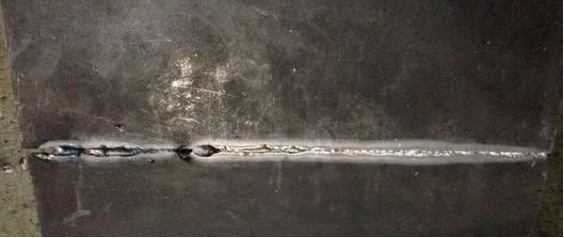
cause
1. Small welding current and shallow melting depth;
2. groove and clearance size is unreasonable, blunt edge is too large;
3. the arc is too long;
4. Poor cleaning between layers and welding roots.
Preventive measures
1. Adjust and select the appropriate welding current;
2. The design of groove and gap size should be reasonable.
3. reduce the arc length;
4. Clean the interlayer and welding root.
Weld through
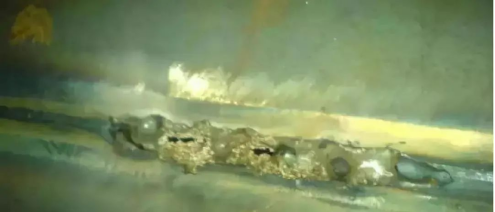
cause
1. Welding current is too large;
2, the welding parts heated too much;
3, groove butt clearance is too large;
4, welding speed is slow, arc residence time is long, etc.
Preventive measures
1. Select appropriate current parameters;
2. When heating welding parts, attention should be paid to the temperature should not be too high;
3. Groove and clearance design should be reasonable;
4. Accelerate the welding speed appropriately.
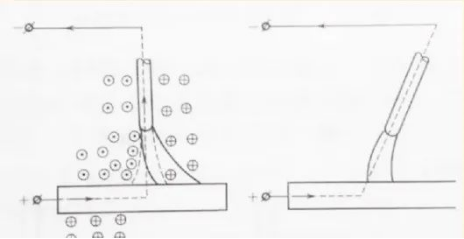
The main causes of magnetic bias are as follows:
① The grounding cable is not connected correctly
For a long workpiece, magnetic bias will occur if one end is grounded, as shown in Figure A.
This is because there is current flowing through the workpiece on the left of the axis of the welding wire. The magnetic field generated by it is superimposed with the magnetic field of the arc, making the magnetic field line density on this side greater than that on the right side of the arc.
In this way, the larger electromagnetic force on the left side pushes the arc to the right side.
The solution is to ground the workpiece on both sides. The welding wire (electrode) tilts to the right at a certain Angle, enlarges the left space, and makes the magnetic field line density on both sides symmetrical, as shown by the dotted line in Figure b.
② Ferromagnetic material
The magnetic conductivity of ferromagnetic materials is much greater than that of air. When there is ferromagnetic material (such as steel plate, iron block, etc.) on one side of the arc, the magnetic force line on this side will be sucked into the ferromagnetic material, so that the density of magnetic force line near the axis of the welding wire (electrode) on this side is less than that on the other side, as shown in the figure.
In this way, the force on the ferromagnetic side is less than on the other side, and the arc is biased toward the ferromagnetic side, just as the ferromagnetic material attracts the arc. The larger the steel plate around the arc or the closer it is to the arc, the more serious the magnetic deflection will be.
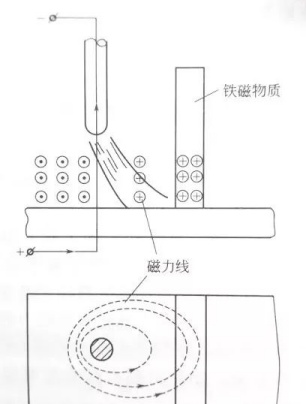
For the long workpiece, when the arc walks to the end of the workpiece, the arc will be biased to the inside of the workpiece, which is caused by the asymmetry of ferromagnetic material on both sides of the arc at this time. The magnetic permeability area on the inside of the steel plate is much larger than that on the outside, which is equivalent to placing a piece of ferromagnetic material on the inside, as shown in the figure below.
What are the common methods to reduce arc deflection?
Bias blowing will lead to the deterioration of arc operability, welding process instability, poor weld formation, serious welding defects and arc extinguishing, so it must be avoided in the welding process. The methods to prevent magnetic bias are as follows.
① Try to use short arc, this is because the short arc is not easy to be affected by airflow, the possibility of blowing off. Even when magnetic bias is produced, the deviation is smaller than in the case of long arcs.
② If allowed, try to use AC arc for welding, because AC arc almost will not produce magnetic bias.
(3) Outdoor work, such as strong winds, must take shelter measures to protect the arc. When welding the pipe, try to plug the pipe mouth to prevent the airflow in the pipe caused by blowing.
(4) For the butt weld with large groove clearance, a backing plate is added under the weld to prevent arc deflection caused by heat convection.
⑤ Add a small piece of arc initiation plate and arc extinguishing plate at both ends of the weld, so that the distribution of magnetic force lines on both sides of the arc walking at the end is also as symmetrical as possible.
⑥ Adjust the Angle of the welding wire (electrode) in the operation, so that the magnetic force line on both sides of the wire to maintain symmetry, this method is used in the actual production.
The use of correct wiring methods, for the larger workpiece using both ends of the ground.
⑧ try to use small current for welding.
At present, the most commonly used welding methods are solid cored wire gas welding (GMAW) and flux cored wire gas welding (FCAW). For carbon steel and low alloy steel, the main gas used in GMAW is argon (Ar)+ carbon dioxide (CO2), and the main gas used in FCAW is 100% carbon dioxide (CO2). It is found that FCAW is more prone to cold crack than GMAW. In order to verify the above inference, we carried out relevant experiments. First of all, we use the method of measuring diffused hydrogen of fused metal, and study the influence of different welding methods, welding parameters and gas on diffused hydrogen of fused metal. Secondly, the influence of diffused hydrogen content on the cold crack was studied by the inclined Y-groove welding crack test.
Experimental content and results of diffused
hydrogen determination of fused metal
The welding sample includes the front and rear two priming, arc extinguishing test block and the formal sample in the middle. The sample material was composed of carbon steel. The intermediate sample was treated with hydrogen at 650C for 1 hour and then cooled in an inert atmosphere. Then the intermediate sample was weighed with an accuracy of 0.01g. Store in a clean, dry container. The welding methods were GMAW and FCAW. For GMAW, we used gas Arcal 5, Arcal 21 and welding wire ER70S-6. For FCAW, 100% carbon dioxide (CO2) is used as gas, and E71T-1 low hydrogen flux-cored wire with diffused hydrogen content of H4 and H8 is used as welding wire, respectively. Welding equipment adopts automatic welding trolley, in order to ensure the comparability of the test, the welding environment must be controlled constant temperature and humidity. Before welding, we need to purge the welding pipeline for half an hour to ensure that there is no moisture adsorption in the gas pipeline. In addition, the dew-point meter is used to measure the dew-point at the outlet of different gas cylinders to master the moisture content of the above different gases. The welding mode is non-swing welding, and the welding parameters must be 4g+-0.5g of molten metal. Immediately after the welding (within 3-5s), place the welding sample in the ice-water mixture for 20 seconds, and then store the sample in the dry ice alcohol solution or liquid nitrogen below -78C. Before performing the diffused hydrogen content test, clean the intermediate sample with acetone or alcohol solution and quickly dry it with cold air. It is then placed in a collector as shown in the figure and argon gas is added to isolate the sample. The collector was placed in a heating furnace at 45℃ for 72 hours to collect diffused hydrogen from the central sample. Finally, the content of diffused hydrogen was measured by gas image chromatography.
The test results show that:
1) The diffused hydrogen content of fused metal using FCAW is significantly higher than that of solid cored gas shielded welding (GMAW). The main reason is that we believe that the water contained in some raw materials (such as rutile and fluorite) of powder inside the flux-cored wire exists in the form of crystal water. These crystalline waters have strong ion-dipole interaction and can remain stable below 1000C. When under the action of an electric arc, it breaks down into atomic hydrogen and enters the molten metal.
2) For gas shielded welding of solid cored wire, the diffused hydrogen content of fused metal with short circuit transition is lower than that of fused metal with jet transition. The main reason is that compared with the injection transition, the short circuit transition has a shorter arc length, and the contact range between the atmospheric water and the arc around the arc is smaller, which will produce less hydrogen atoms to dissolve into the molten metal.
3) For gas shielded welding with solid cored wire, the content of diffused hydrogen of cladding metal decreases with the increase of CO2 in gas. The main reason is that CO2 is decomposed into oxygen atoms under the action of electric arc, and oxygen atoms in the atmosphere of electric arc combine with hydrogen atoms, thus reducing the number of hydrogen atoms entering the interior of the fused metal.
Experimental content and result of welding crack of inclined Y groove
It is known from the above experiments that FCAW has a higher diffused hydrogen content in fused metal than GMAW. Whether the more diffused hydrogen content, the more likely to cause cold crack? Now let's look at the following experiment.
The sample is a sample of inclined Y-groove welding crack. The material is low carbon steel and the plate thickness is 25mm. The middle groove is inclined Y groove, and the two slope mouths are X groove. Before the formal welding test, it is necessary to complete the welding of X groove on both sides. The weld shall be 100% fully permeable. The weld can also be called constrained weld, whose purpose is to make the intermediate formal weld receive greater restraint during welding. Formal welds only require one weld.
We are going to use three samples.
Sample ① : Welding method is GMAW, gas is Arcal 5;
Sample ② : The welding method is GMAW, and the gas is Arcal 21;
Sample ③ : The welding method is FCAW, and the gas is 100%CO2.
The welding parameters shall be consistent with those used in the diffused hydrogen content test.
When PT test (penetration test) was carried out on the surface weld, it was found that cracks had appeared on the surface of the weld using FCAW (there was a purple line in the middle of sample ③, where was the crack). Therefore, it can be shown from the test that the sensitivity of cold crack is proportional to the content of diffused hydrogen in the weld.
Technical background
Push and draw fuse gas shielded welding gun is widely used in industrial manufacturing. Compared with the ordinary push-wire welding gun, the push-wire welding gun comes with a motor. When working, the motor on the front of the welding gun pulls the welding wire, and the motor on the welding machine pushes the welding wire, the wire feeding distance can reach 12 meters or even farther, and the longest of the ordinary push-wire welding gun can only do about 5 meters. Because the welding wire tray is on the welding machine, you can use a large welding wire tray, and the melting rate is the same as that of the ordinary push wire welding gun.
In aluminum or copper welding, because the welding wire is soft, it is easy to plug the wire in the process of pushing the wire, so the length of the welding gun for soft welding wire can only be about 3 meters, then the advantages of pushing and drawing the welding gun in length are more obvious. In the actual industrial production, the push and draw welding gun is mainly used for welding with soft welding wire. In recent years, with the national efforts to promote energy saving and efficiency improvement and the development of molten gas welding technology, molten gas welding is more and more applied in the welding field of aluminum alloy, and more and more application places of push-draw welding gun.
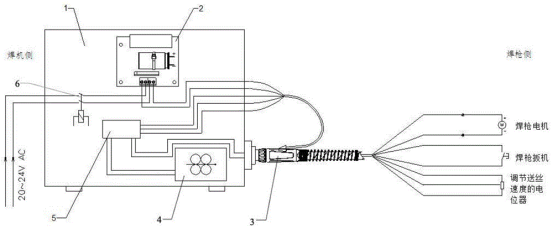
Push-draw welding gun, as a kind of welding auxiliary equipment, must be used with welding machine and related protective gas, but most of the existing fuse gas shielded welding machines do not support push-draw welding gun. If the user needs to use the push-draw type welding gun, it is necessary to buy a welding machine supporting the push-draw type welding gun or install synchronous drive on the existing machine. The former requires a large amount of capital, which is not allowed economically when the usage rate is not high, the latter requires complex wiring and installation, the need for independent power supply, and the motor drive tension is unstable, the effect is not ideal. Attached Figure 1 is the wiring diagram of the independent control circuit board of the prior art wire-drawing welding gun. The control board of the wire-drawing motor 2 is fixed in the wire feeder 1 at the side of the welding machine. The independent power supply is connected through relay 6, and the welding gun is connected through the cable. Wire pusher motor controller 5 connects to wire pusher motor 4 through wire pusher motor connection, and welding gun 3 through welding gun control line. In this connection mode, an independent power supply is needed, and a relay needs to be connected to control the on and off of the power supply. The relay is generally controlled by the power supply of the air supply valve. The wiring mode is complex, and the power of pulling the welding wire is not constant, and the current limiting resistance above is easy to heat.
Although some welding machines support push-draw welding gun, but because of the different welding machine manufacturers design wire-drawing welding gun drive circuit, users purchase push-draw welding gun need to inform the manufacturer of motor parameters, potentiometer parameters and wiring mode and other information, the manufacturer begins production after receiving the order. This causes long order cycle, small batch, inventory pressure and high production costs.
Moreover, different motor parameters are not the same, the control mode of the push and draw welding gun has very strict requirements on the parameters of the welding gun motor, sometimes only the same parameters can be used, otherwise it can not work normally.
Basic method of welding with push-draw welding gun
1. welding temperature
TBi air cooled push wire drawing welding gun material polyethylene polypropylene ABS hard PVC polyformaldehyde polycarbonate
TBi air cooled push wire drawing welding gun Temperature: 250-280 220-230 230-250 220-240 270-300 260-280
2. welding method:
The welding gun nozzle is aligned with the electrode, in order to make the electrode and the welding place heated at the same time, push the wire drawing welding gun, the welding gun should be fan-shaped swing between the weld and the electrode, when the electrode is softened, the constant pressure is applied to the welding strip, and the nozzle of the welding gun is slowly welded from left to right. The Angle of the nozzle of the plastic welding gun and the surface of the base material depends on the thickness of the base material and the temperature of the hot air. Generally, the tilt Angle is 25°-45°, and the distance between the nozzle and the weld surface should be about 10mm. The swing speed of the plastic welding gun is generally 2 times per second, and the swing is about 10mm.
Attention
Spot welding Electrode spot welding is usually divided into two sided spot welding and single side spot welding. Push the wire drawing welding gun to push the wire drawing welding gun to push the wire drawing welding gun, the electrode from both sides of the workpiece to the welding. Typical double-sided spot welding is commonly used, when both sides of the workpiece have electrode indentation. Spot welding of large welding area of conductive plate as the lower electrode, so as to eliminate or reduce the indentation of the workpiece below. Generally used for spot welding of decorative panels. At the same time welding two or more double-sided spot welding, with a transformer to connect the electrodes in parallel, at this time, the impedance of all current paths must be basically equal, and the surface state of each welding position, material thickness, electrode pressure must be the same, push and draw wire welding gun to ensure that the current through each spot is basically the same, using multiple transformers double-sided multi-point spot welding, This will avoid shortfalls
The fault is divided into mechanical fault and electrical fault
(1) Mechanical failure
Fault symptoms.
1, the wind pressure is reduced, the air volume is reduced;
2, the air pump shell is crackling;
3, vibration is too large;
These failures are caused by the wear of the motor bearing, the use of the carbon brush of the push and draw welding gun, the deformation of the impeller or the foreign body in the impeller and other reasons; This fault can be checked around the motor shaft
Whether the swing is too large, wind leaf and other parts can be solved; If the blade or rectifying ring should be replaced, special attention should be paid to their installation direction push wire drawing welding gun
(2) Electrical faults
1, the temperature is too high, may be silicon controlled short circuit (use a multimeter to measure T1, T2 resistance is 0Ω) or temperature controller failure; Push and draw welding gun
2, Adjust the temperature regulator knob, can adjust the temperature, but can not be adjusted to the cold air, TBi360 push wire drawing welding gun, with ammeter measurement, ammeter pointer between 2A-4.5A, can not go back At about 0.5A, the temperature controller fails; Push and draw welding gun
3, the use of sudden cooling, temperature controller failure, heater circuit (use a multimeter to measure the resistance between the heater pins, the normal value is about 50Ω) or Thyristor damage;
4, in the use of the process, the temperature is high and low, it may be damaged potentiometer or a wire joint loose resulting in poor contact.
5. When running, the speed drops sharply and the wind pressure drops significantly, it may be the motor is damaged. The temperature controller knob should be immediately adjusted to "1" to push and draw the wire welding gun, and the TBi air cold push and draw the wire welding gun should be repaired after the barrel is cooled.
The selection of electrode must be in ensure the safety and reliable use of welding structure, according to the chemical composition of the welding material, mechanical properties, plate thickness and joint form, welding structure characteristics, stress state, structural conditions, the requirements of weld performance, welding construction conditions and technical and economic benefits, targeted selection, if necessary, also need to carry out welding performance test.
Same steel welding electrode selection points
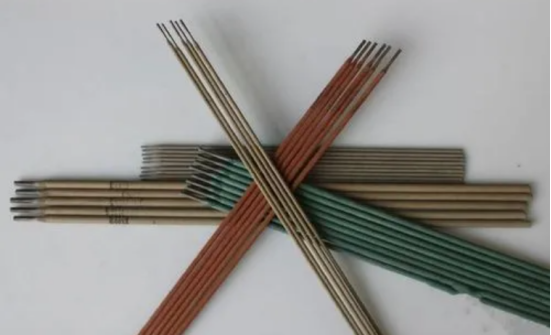
1. Consider the mechanical properties and chemical composition of weld metal
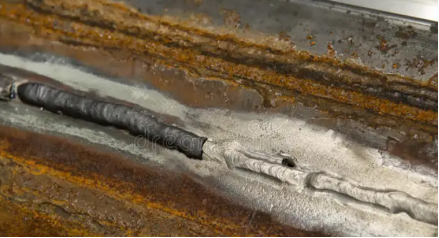
For common structural steel, the strength of weld metal and base metal is usually required, and the tensile strength of fused metal equal to or slightly higher than that of base metal should be selected. For alloy structural steels, the alloy composition is sometimes required to be the same or close to that of the base metal. The welding rod with lower strength than the base metal should be considered when the welding structure is rigid, the joint stress is high and the weld is easy to crack. When the content of carbon, sulfur, phosphorus and other elements in the base metal is high, cracks are easy to occur in the weld, and alkaline low hydrogen electrode with good cracking resistance should be selected.
1. Consider the performance and working conditions of welded components
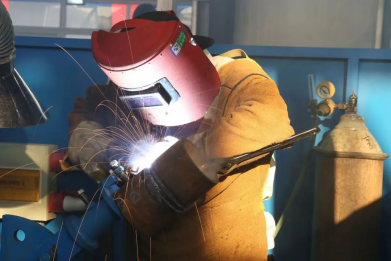
For the welding parts under dynamic load and impact load, in addition to meeting the strength requirements, the main thing should be to ensure that the weld metal has high impact toughness and plasticity, and the low hydrogen electrode with high plasticity and toughness index can be selected. For welds in contact with corrosive media, stainless steel electrode or other corrosion resistant electrode should be selected according to the nature and corrosion characteristics of the medium. For welding parts working under high temperature, low temperature or other special conditions, corresponding heat resistant steel, low temperature steel, surfacing or other special diagnostic electrodes shall be selected.
1. Consider the characteristics of welding structure and stress conditions
For the thick and rigid welding parts with complex structure and shape, due to the great internal stress produced in the welding process, it is easy to crack the weld, so the alkaline electrode with good cracking resistance should be selected. On the force is not large, welding parts difficult to clean up, should choose to rust, oxide skin, oil sensitive acid electrode. For welding parts that cannot be turned over due to conditions, the electrode suitable for all-position welding should be selected.
4. Consider construction conditions and economic benefits
In the case of meeting the requirements of product performance, the acid electrode with good technology should be selected. In narrow or poor ventilation conditions, should choose acid electrode or low dust electrode. For the structure of large welding workload, conditions should be as far as possible to use high efficiency electrode, such as iron powder electrode, high efficiency gravity electrode, or the selection of the bottom electrode, vertical downward electrode and other special electrode, in order to improve welding productivity.
Key points of welding rod selection in dissimilar steel welding
1. Carbon steel ten low alloy steel with different strength levels
(Or low alloy steel ten low alloy high strength steel)
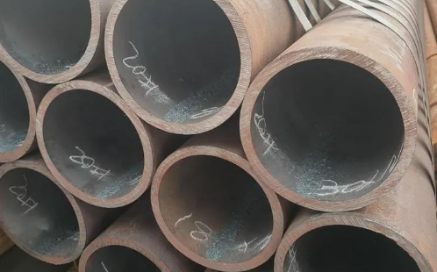
1. Low alloy gold steel + austenitic stainless steel
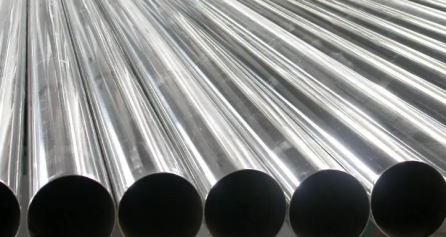
Low alloy steel + austenitic stainless steel should be selected in accordance with the limited value of the chemical composition of the molten metal, the general selection of chromium, nickel content is higher, plastic, crack resistance is better Cr25-N; Type 13 austenitic steel electrode to avoid cracks due to the formation of brittle hardened microstructure. But the welding process and specification should be determined according to the poor welding of stainless steel.
3. Stainless steel composite steel plate
Stainless steel composite steel plate should be considered for the base, cladding, transition layer welding requirements of three different performance of the electrode. For the welding of the base (carbon steel or low alloy steel), the corresponding strength grade of structural steel electrode is selected; The coating is directly in contact with the corrosive medium, and the austenitic stainless steel electrode of the corresponding composition should be selected. The key is the welding of the transition layer (that is, the interface between the coating and the base layer). The dilution effect of the substrate material must be considered, and the Cr25-Ni13 austenitic steel electrode with high chromium and nickel content, good plasticity and crack resistance should be selected.
Abstract: The properties and components of welding shielding gases have a great impact on welding quality. Different properties of common welding shielding gases have different effects on welding speed, weld penetration and arc stability. Therefore, in the actual production process, a variety of influencing factors should be considered comprehensively to select appropriate shielding gases to provide reliable guarantee for welding quality.
一、Introduction
In the process of arc welding, if no protector is added, oxygen (O2) or other gases in the atmosphere will invade the arc and molten pool and react with the metal melted at high temperature, resulting in welding defects and affecting the adaptability of the product. The main function of welding gas is to protect the metal to be welded from pollution of other gases and impurities, to ensure the quality of welding products; On the other hand, the properties of welding protective gas have corresponding effects on welding speed, weld penetration, forming, welding dust, arc stability and so on. Welding protective gas can be divided into inert gas (e.g., He) and non-inert gas (e.g., CO2) according to the degree of gas activity. According to the component composition, it can be divided into a single component gas (such as: GTAW- using pure Ar as a protective gas) and multiple gas mixture (such as: GMAW- using pure 75%Ar+25%CO2 as a protective gas); According to the oxidation strength of gas can be divided into strong oxidizing gas, weak oxidizing gas, reducing gas, neutral gas; In addition, in addition to gas activity degree, component composition, oxidation tendency, ionization energy and thermal conductivity of protective gas are also important basis for selection of protective gas.
一、Selection and application of welding protective gas
(一)Selection and application of welding gas in GTAW
Argon (Ar) is an inert gas, does not react with other elements at normal and high temperature, and has good arc stability, low ionization voltage, beautiful weld formation and low cost, so it is suitable for various metal welding protection gas in GTAW. At present, the metals that can use argon as welding protection gas in GTAW include all carbon steel, stainless steel and almost all non-ferrous metals such as aluminum, copper, nickel, titanium, zirconium and their alloys, and the welding effect is excellent. Although using pure argon as GTAW protective gas can obtain excellent welded joints, due to its low arc energy, the welding penetration force and welding speed cannot meet the actual needs. In this case, argon can be mixed with other gases to improve the welding penetration force and welding speed, such as Ar+He or Ar+H2.
(二)Selection and application of GMAW welding gas
1, ordinary carbon steel (structural steel) GMAW protective gas selection
For ordinary carbon steel, or structural steel used for the production of steel structure, if there are not strict requirements on welding quality and welding appearance, CO2 is usually used as a protective gas, also known as CO2 gas shielded welding, this method has the advantages of high production efficiency, good welding quality, low cost, strong practicability and so on. It should be noted that the soluble mass fraction of water in liquid CO2 is 0.05%, and the excess water is free to sink at the bottom of the bottle. This water evaporates with CO2 in the welding process and mixes with CO2, directly into the welding zone. Therefore, water is the most important harmful impurity in CO2 gas. The purity and quality of the protective gas CO2 shall meet the requirements.
Ar+CO2 can be used as a protective gas when non-destructive testing or pressure test is needed in situations with high welding quality. The change of the component of the protective gas can affect the spatial form of welding arc, arc energy density, droplet transition mode, welding wire melting characteristics and splashing during welding. It can also improve the stability of arc and transition in the welding process and the wetting of liquid metal and molten pool, improve weld forming, reduce spatter, eliminate and prevent defects, and improve the performance of weld joint.
2, stainless steel GMAW protective gas selection
Stainless steel GMAW welding gas selection, not only according to the type of stainless steel and welding position and other factors, but also must consider back forming, welding combination, droplet transition form and other factors, in order to obtain the best welding effect.
With pure argon only suitable for TIG welding stainless steel, but not suitable for MIG welding stainless steel. In the process of gas shield welding under pure argon, the surface tension of stainless steel droplet and molten pool is large, and the fluidity of liquid metal in molten pool is very poor. The surface of weld can not be spread and moistened, and the forming of weld pass is poor.
When 1-2% oxygen is added into argon, the surface tension of stainless steel droplet and molten pool is reduced, the fluidity of liquid metal in molten pool is enhanced, and the spreading wettability of weld surface is improved. The weld depth and width are moderate, and the weld path is beautiful. 0-1% suitable for austenitic stainless steel, 0-2% suitable for ferritic stainless steel; The 0-2% molten pool has better fluidity than the 0-1% molten pool, suitable for the spray transition and pulse transition of stainless steel welding wire, suitable for the flat welding and flat fillet welding of stainless steel welding parts.
When adding 2-5%CO2 to argon, it is concerned that there is a tendency to carburize. The test proved that CO2≤5%, carbon content of weld ≤0.03%, still below the level of ultra-low carbon. The arc stability is good, the oxidation ability is weakened, the alloying elements are burned less, and there is no carburizing tendency. Suitable for short circuit transition and pulse transition of stainless steel welding wire. When 2-5%CO2 is added in argon, it is suitable for the combination process of TIG bottom welding and MAG filling cover welding of stainless steel pipes. The welding process is all-position, short circuit transition, and the weld is smooth and beautiful.
The advantages of three-way gas mixture are more prominent, such as the three-way gas mixture divided into Ar+5%CO2+2%O2, strong arc concentration, good single-side welding and double-sided welding, suitable for stainless steel welding with higher technical requirements; It is divided into Ar+He+CO2 gas mixture, in which helium gas can increase weld penetration, improve welding speed and reduce the deformation of welds. The gas mixture composed of Ar+CO2+N2 is a new technology developed in Europe and America, in which nitrogen can increase the penetration depth and width of the weld.
3, aluminum alloy GMAW protective gas selection
For aluminum alloy suitable for welding, GMAW usually uses Ar as a protective gas. It is worth noting that aluminum alloy has higher requirements for the purity of welding gas. If the protective gas cannot reach, black oxides will appear on both sides of the weld, affecting the appearance quality of welding. A certain proportion of He can be added to Ar if the welding depth and welding speed are to be obtained. Because of the large heat transfer coefficient of He, the arc voltage is higher than that of Ar at the same arc length. High arc temperature, large base metal heat input, high melting speed. Suitable for welding thick aluminum plate, can increase penetration, reduce porosity, improve production efficiency. However, if the proportion of He is too large, there will be more spatter.
4, other metal and alloy GMAW protective gas selection
For copper and copper alloy GMAW, in addition to using pure Ar as welding protection gas, a certain proportion of nitrogen can be added to Ar gas, which can reduce the production cost and also play a protective role, but there is a certain splash and smoke, forming is poor. For nickel and nickel alloy GMAW, in addition to using pure Ar and Ar+He as welding protection gas, a small amount of hydrogen can also be added to Ar gas, which can also improve the welding efficiency. For titanium and titanium alloy GMAW, pure Ar and Ar+He can only be used as welding protective gas because Ti, N, H and O have strong tuberculosis.
(一)conclusion
In summary, welding shielding gas plays a particularly important role in gas shielding welding. The selection of welding shielding gas directly affects the quality, efficiency and cost of welding production. Because of the diversity of welding materials, the selection of welding gas is more complex. In actual production, it is necessary to comprehensively consider welding material, welding method, droplet transition form, welding position and required welding effect, so as to select the most suitable welding gas and achieve the best welding result.
In the structure of the boiler, pressure vessel, pressure pipe welding, the joint must be completely melted through, but some joints can not be in the back root or rewelding can not meet the requirements, then we must use single-side welding double-sided forming technology.
Single-side welding and double-sided forming technology refers to the operation process of welding from the front of the groove of the welded part to achieve the formation of a dense and uniform weld at the same time.
It is the selection of ordinary electrode or special bottom electrode welding, using different operation techniques to make the base metal groove blunt edge metal regularly melted into a certain size of the weld hole, in the arc action on the front weld pool at the same time, so that 1/3~2/3 arc through the weld hole and the formation of both sides are uniform and neat, forming good, in line with the quality requirements.
Two bottom operation
Continuous arc welding method and arc extinguishing welding (also known as broken arc welding) method of two categories:
(1) Even arc welding at the bottom, after the arc is ignited, artificial arc extinguishing is not allowed in the middle, and it must be a short arc continuous transport until the replacement of another electrode is extinguished.
(2) When the arc extinguishing welding method is laid, the arc is rhythmically started and extinguished, so as to control the temperature of the molten pool and form the single-side welding and double-sided forming.
Arc extinguishing welding base operation method
One-click threading method: when the arc is burned on both sides of the groove, the metal on both sides of the blunt edge is melted to form a melting hole at the same time, and then the arc is quickly extinguished. When the molten pool is about to solidify (dark red), the arc is ignited at the arc extinguishing place, and the operation is repeated in turn.
Suitable for: One click threading method is suitable for the welding of thin plate, small diameter pipe (≤φ60mm) and small gap (1.5~2.5mm).
Advantages: One click threading is not easy to appear slag inclusion, porosity and other welding defects.
Disadvantages: the temperature of molten pool is not easy to control, low temperature, easy to appear not welded through; High temperature, the back of the residual high is too large, even appear welding tumor.
Two-click threading method: The arc is ignited alternately on both sides of the groove, that is, a drop of metal is melted at the right blunt edge, and then a drop of metal is melted at the left blunt edge, and so on.
Suitable for:welding of thick plate, large diameter tube and large gap.
Advantages: Two-click threading is easy to master, the temperature of the molten pool is easy to control, and the blunt edge fusion is good.
Disadvantages: easy to appear slag inclusion, porosity and other welding defects.
Three-click threading method: After the arc is ignited, a drop of metal is melted at the left blunt edge, a drop of metal is melted at the right blunt edge, and then a drop of metal is melted at the middle gap.
Advantages: Three click threading method is suitable for the base of the larger gap.
Disadvantages: the back is prone to cold shrinkage hole defects.
Essentials of arc extinguishing welding operation
First: look at the shape of the molten pool and the size of the molten hole, and distinguish between molten slag and molten metal.
Second: listen to the sound of arc breakdown groove root, when the arc breakdown groove root, will emit a "poof poof" sound, which indicates that the weld penetration is good. If there is no such sound, it indicates that the groove root is not broken down by arc. If welding continues, it will cause incomplete welding.
Three :accurately grasp the size of the formation of the weld hole, generally on both sides of the blunt edge need to melt 0.1~1 mm.
Four : ensure that the arc break and re-ignition time interval is short, generally not more than 1s.
Arc extinguishing welding and arc closing technique
In the replacement of the electrode arc, should be the electrode to the root of the top pressure, so that the weld hole in front of the molten pool slightly expanded, at the same time to improve the arc extinguishing, arc burning frequency, filled with arc pit, so that the molten pool slow cooling and full, prevent shrinkage hole and arc pit cracks.
What is a conductive mouth
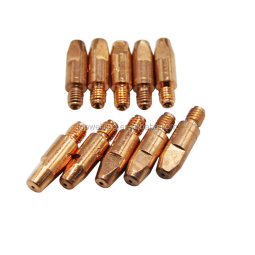
Conductive nozzle is: welding equipment wearing parts, belong to welding consumables, the tail part of the welding gun, the metal nozzle that sends the welding wire, called conductive nozzle.
Generally brass, copper, chrome zirconium copper, beryllium copper. Copper conductive nozzle is commonly used, chromium-zirconium copper material is better than copper, more durable. Ceramic makes conductive mouth, later due to performance and other problems were eliminated. The conductive nozzle is classified according to the specification diagram. Commonly used are co2 gas welding machine with conductive nozzle, submerged arc welding conductive nozzle, electrode.
In the European and American welding gun, mainly with copper conductive nozzle, in the Japanese and Korean welding gun is mainly equipped with chromium zirconium copper conductive nozzle. It is mainly used in Europe and the United States as a protective gas with argon as the main mixed gas, with long arc and poor gas cooling performance. The main way of the failure of the conductive nozzle is caused by the micro arc between the inner hole wall of the conductive nozzle and the welding wire. Therefore, red copper with better conductivity and thermal conductivity is used as the conductive nozzle, while CO2 gas is used as the protective gas in Asia, with short arc and strong gas cooling ability. Japan believes that the failure of the conductive nozzle is mainly caused by the friction loss between the inner hole wall of the conductive nozzle and the welding wire, so the rigid chrome-zirconium copper material is mainly used. As China mainly uses CO2 gas as a protective gas, chrome-zirconium copper conductive nozzle should be selected.
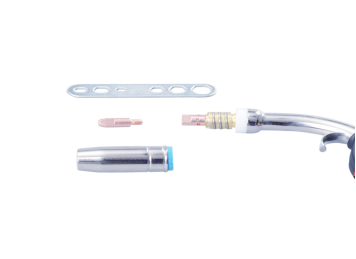
What are the functions and structural forms of gas welding conductive nozzle
In order to more steadily direct the current to the arc area, a copper nozzle is installed at the outlet of the torch. It can increase the service life of the conductive nozzle, enhance the stability of the welding process and improve the ability of conducting current. According to different requirements, the conductive nozzle is designed into seven forms: cone, oval, insert, cone table, cylinder, semicircle and roller.
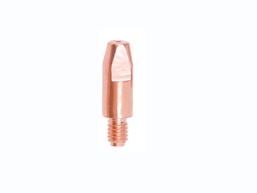
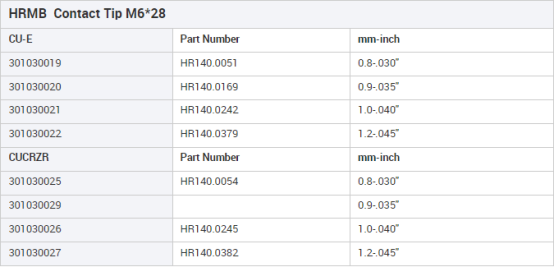
Huarui Contact Tip For MB25AK 24KD 26KD 36KD Mig Welding Spare Parts
welcome to our alibaba shop:
https://czhuarui.en.alibaba.com/
https://topwelding.en.alibaba.com/
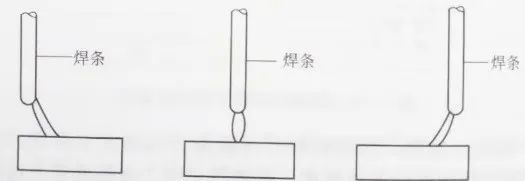
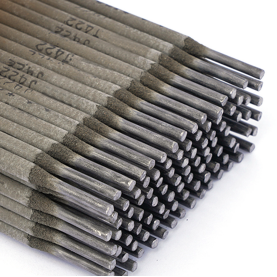
Welding rod will often be due to moisture absorption and the process performance deteriorates, resulting in arc instability, spatter increase, and easy to produce pores, cracks and other defects. Therefore, the electrode must be strictly dried before use.
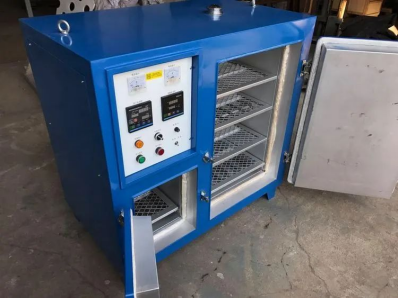
General acid electrode drying temperature 150 ~ 200℃, time 1 hour; The drying temperature of alkaline electrode is 350 ~ 400℃, and the time is 1 ~ 2 hours. After drying, it is placed in the thermal insulation box of 100 ~ 150℃.
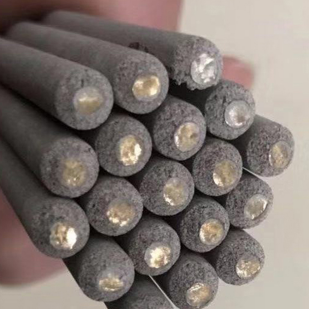
After the electrode is damp, the general medicine skin color is dark, the electrode collision loses the crisp metal sound。
Influence of damp electrode on welding process:
(1) The arc is unstable, the splash is increased, and the particles are too large.
(2) deep penetration, easy to bite edge.
(3) The slag is not covered well and the welding wave is rough.
(4) It is difficult to remove slag.
Influence of damp electrode on welding quality:
(1) easy to cause welding cracks and pores, especially alkaline electrode.
(2) The values of mechanical properties are easy to be low.
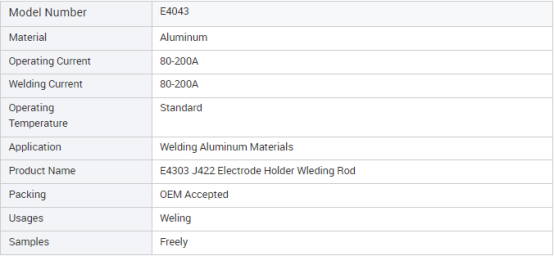
HUARUI E4303 J422 Electrode Holder Wleding Rod Welding Electrode Low Carbon Steel Welding Rod
welcome to our alibaba shop:
https://czhuarui.en.alibaba.com/
https://topwelding.en.alibaba.com/
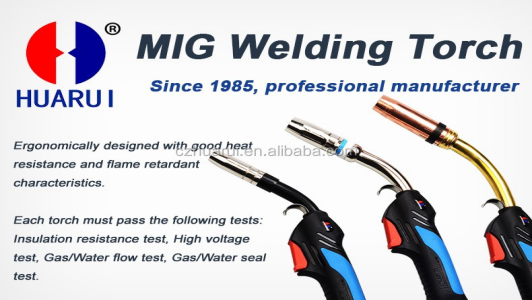
CO2 MIG welding is one of the welding methods, which is based on carbon dioxide gas as a protective gas for welding. In the application of simple operation, suitable for automatic welding and all-round welding. No wind during welding, suitable for indoor work. The full name of carbon dioxide shielded welding is carbon dioxide gas shielded arc welding. The shielded gas is carbon dioxide, and sometimes the mixture of carbon dioxide and argon is used. This welding technology is mainly used for manual welding.
In the application of simple operation, suitable for automatic welding and all-round welding. Poor wind resistance during welding, suitable for indoor work. Due to the special influence of zero thermal and physical properties of carbon dioxide gas, when using conventional welding power supply, it is impossible for the molten metal at the end of the wire to form a balanced axial free transition, usually need to use short circuit and melt drop neck burst, therefore, such as the use of high quality welding machine, the parameter selection is appropriate, you can get a very stable welding process, so that the splash reduced to the minimum degree.
Advantages of CO2 MIG welding:
1. Low welding cost. Its cost is only 40~50% of submerged arc welding and electrode arc welding.
2. High production efficiency. Its productivity is 1~4 times that of electrode arc welding.
3, easy to operate. Open arc, the thickness of the workpiece is not limited, can be welded in all positions and can be welded downward.
4. High cracking resistance of weld. The weld has low hydrogen and less nitrogen content.
5. Small deformation after welding. The angular deformation is 5 parts per thousand, and the unevenness is only 3 parts per thousand.
6, welding splash small. Welding spatter can be reduced when using ultra-low carbon alloy wire or flux-cored wire, or adding argon gas to carbon dioxide.
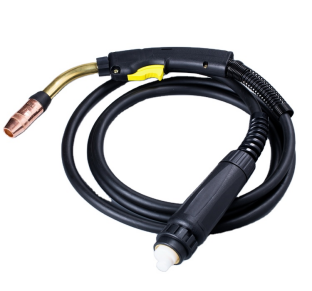
Harmful substances produced by CO2 MIG welding can be divided into two categories:
One is harmful gases: carbon dioxide (CO2), carbon monoxide (CO), nitrogen dioxide (NO2), ozone (O3)
One is soot: iron trioxide (Fe2O3), silicon dioxide (SiO2), manganese oxide (MnO), other impurities
These harmful substances, in addition to carbon dioxide is in order to protect the arc and weld pool, from the torch ejection, welding is not finished and left around the welding area, the rest of the harmful substances are produced from the welding arc and weld pool.
Due to the low cost of gas shielded welding, carbon dioxide gas is easy to produce, widely used in enterprises of all sizes, the price of the protective gas is low, the short circuit transition weld formation is good, and the use of deoxidizing agent containing welding wire can be obtained without internal defects of high quality welding joint. Therefore, this welding method has become one of the most important welding methods for ferrous metal materials.
welcome to our alibaba shop:
https://czhuarui.en.alibaba.com/
https://topwelding.en.alibaba.com/
1. Electrode arc welding:
Principle - Arc welding method with manual operation of the electrode welding. The stable burning arc established between the electrode and the weldment is used to melt the electrode and the weldment so as to obtain a strong welded joint. It is gas-slag combined protection.
Main features - flexible operation; Low assembly requirements for welded joints; Weldable metal material wide; Low welding productivity; Strong dependence on weld quality (depends on the welder's operating skills and field play).
Application - widely used in shipbuilding, boiler and pressure vessel, machinery manufacturing, building structure, chemical equipment and other manufacturing and maintenance industries. It is suitable for welding of all kinds of metal materials, all kinds of thickness and all kinds of structural shapes.
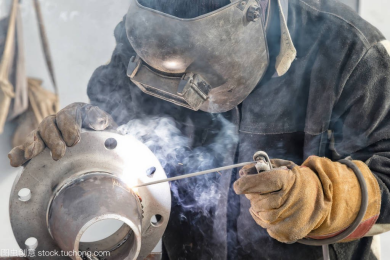
2. Submerged arc welding (automatic welding) :
Principle - The arc burns under the flux layer. The heat generated by the burning arc between the wire and the weldment is used to melt the wire, flux, and base metal (the weldment) to form a weld. It is slag protection.
Main features - high welding productivity; Good weld quality; Low welding cost; Good working conditions; It is difficult to weld in spatial position; High quality requirements for weldment assembly; Not suitable for welding thin sheet (welding current less than 100A, arc stability is not good) and short weld.
Application - widely used in shipbuilding, boiler, bridge, lifting machinery and metallurgical machinery manufacturing. Submerged arc welding can be used in welds where the weld can be kept horizontal or the inclination Angle is not large. Plate thickness must be greater than 5 mm (burn through). Welding carbon structural steel, low alloy structural steel, stainless steel, heat-resistant steel, composite steel, etc.
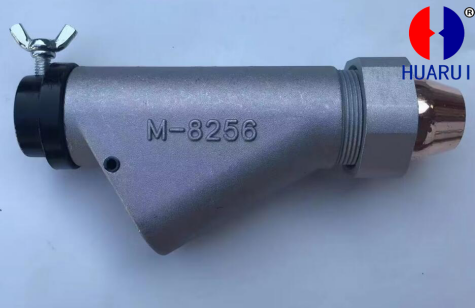
3, CO2 Shielded Welding Torch (automatic or semi-automatic welding) :
Principle: Fusion electrode arc welding using carbon dioxide as a protective gas. It is gas protection. Main features - high welding productivity; Low welding cost; Small welding deformation (arc heating concentrated); High welding quality; Simple operation; High splash rate; It is difficult to weld with AC power; Poor wind resistance; Non - ferrous metals which are easily oxidized cannot be welded.
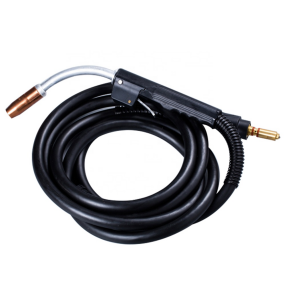
4, MIG/MAG welding (melting extremely inert gas/active gas welding) :
MIG welding principle -- an arc welding method using inert gas as protection gas and welding wire as melting electrode. The shielding gas is usually argon or helium or a combination thereof. MIG uses an inert gas, while MAG adds a small amount of active gas, such as oxygen and carbon dioxide gas, to the inert gas.
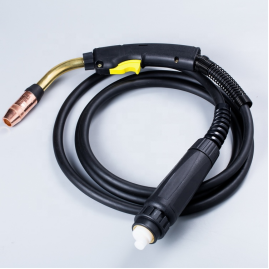
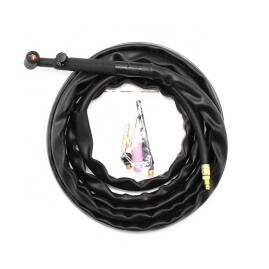
5. TIG welding (tungsten inert gas shielded welding)
Principle - Under the protection of inert gas, using the arc generated between the tungsten pole and the weldment to melt the base metal and the filler wire (or no filler wire) to form a welding seam. Electromelting is extremely low during welding.
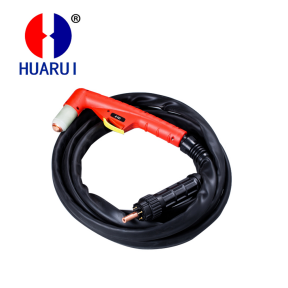
6. Plasma welding
Principle -- A method of welding plasma arc with high energy density by means of the constraint effect of water cooled nozzle on the arc.
Welding precautions:
1、the length of the arc
The arc length is related to the type of electrode coating and the thickness of electrode coating. But all should be taken as short arc as possible, especially low hydrogen electrode. Long arcing may cause air holes. The short arc can avoid the harmful gases such as O2 and N2 from the atmosphere from invading the weld metal, forming bad impurities such as oxides and affecting the quality of the weld.
2. Speed of welding
The appropriate welding speed is based on the diameter of the electrode, the type of coating, welding current, the heat capacity of the welded object, the beginning of the structure and other conditions have their corresponding changes, can not be made standard provisions. Keep proper welding speed, molten slag can cover the molten pool well. All kinds of impurities and gases in the molten pool have sufficient time to emerge, to avoid the formation of slag inclusion and porosity of the weld. If the rod speed is too fast in welding, the shrinkage stress will increase when the welding part is cooled, so that the weld will have cracks.
The main points of welding wire selection
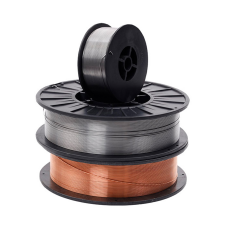
The selection of welding wire should be based on the type of steel to be welded, quality requirements of welding parts, welding construction conditions (plate thickness, groove shape, welding position, welding conditions, post-welding heat treatment and welding operation, etc.), cost and other comprehensive considerations.
welcome to our alibaba shop:
https://czhuarui.en.alibaba.com/
https://topwelding.en.alibaba.com/
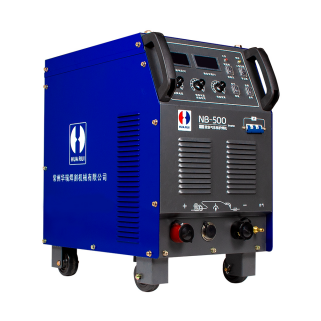
1)This process is suitable for the welding of various large steel structures of low carbon steel and low alloy high strength steel. It has high welding productivity, good crack resistance, small welding deformation, large deformation range, and can be used for welding of thin and medium thickness plate parts.
1. Joint cleaning before welding requires that burrs, oil, rust and dirt affecting weld quality within 30mm on both sides of the groove must be cleaned.
2. When the construction environment temperature is below zero or the carbon equivalent of steel is greater than 0.41%, and the structural rigidity is too large, the object is thick, preheating measures should be adopted before welding, preheating temperature is 80℃~100℃, preheating range is 5 times of plate thickness, but not less than 100mm.
3. When the thickness of the workpiece is greater than 6mm, in order to ensure the penetration strength, the butt edge of the plate should be cut V-shaped or X-shaped groove, groove Angle is 60°, blunt edge p is 0~1mm, assembly gap b is 0~1mm; When plate thickness difference ≥4. Depending on your welding position if it is full position welding, the plate is not thick, the current is between 100 and 200. Voltage BETWEEN 18 and 25. It depends on the performance of your welder and the wire used.
2)How should the welding current of the second welding technology be adjusted?
Two welding arc position: generally at the beginning of the welding end 15-20mm arc, from the end of the normal welding, this is based on the thermal ionization of gas away from the design, because the higher the temperature, the easier the thermal separation, arc easy to produce. Call it: preheating method arc. Render. Generally, the current coarse adjustment and fine adjustment 1 grade, 2 grade, fine adjustment has 10 grade and wire feeding speed is proportional to, the more crisp the welding sound, the better the welding effect of the specific current adjustment has a formula, familiar with the current can be large or small, see their own technique. To see the thickness of the welding base metal and adjust, the voltage is proportional to the current, the voltage is too high splash will be more, and too low, the welding wire and the base metal does not melt.
3)How to operate the technology of secondary protection welding
Left welding, current voltage with good, stable arc combustion, welding wire end with a slightly larger than the wire diameter of the small molten ball is appropriate. As for how thick the base material with how much current can only be mastered in practice. Two welding welding skills, welding torch low, the protection of the gas, generally used left and right swing or swing back and forth, forward welding. Keep your hands steady.
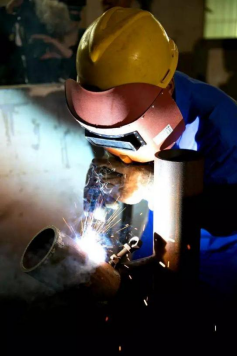
Matters needing attention:
1. The joints with vertical or inclined openings must be welded from bottom to top, and the thin plate butt and vertical fillet welding without opening openings can be welded downward; Flat, horizontal and vertical butt joints can be welded to the left.
2. When the wind speed is greater than 1m/s, take windproof measures.
3. A reasonable welding sequence must be selected according to the structure of the welder.
4. Arc-starting and arc extinguishing plates with appropriate size should be set at both ends of the butt joint.
5. Clean up the dirt and spatter in the hose regularly.
6. Groove groove seam, especially thick plate multi weld, welding wire swing on both sides of the groove should be slightly stopped, the thickness of each layer of serrated strip is not more than 4mm, in order to make the weld fusion good.
7. According to the diameter of the welding wire, choose the electrode of the welding wire correctly, and the length of the welding wire should be controlled within 10 times the diameter of the welding wire.
8. When welding the wire feeding hose, it must be pulled smoothly, not coiled, and the radius of the wire feeding hose should not be less than 150mm. The remaining impure gas in the air supply hose should be discharged before welding.
9. The aperture of the conductive nozzle increases after wear, resulting in unstable welding. It is necessary to replace the conductive nozzle.
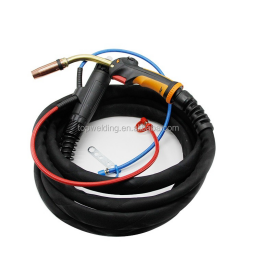
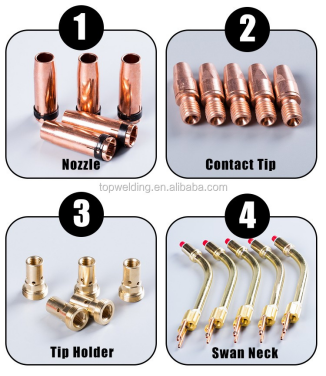
welcome to our alibaba shop:
https://czhuarui.en.alibaba.com/
https://topwelding.en.alibaba.com/
Sources and hazards of radiation
The thorium tungsten pole used in argon arc welding and plasma arc welding contains 1-1.2% thorium oxide. Thorium is a radioactive substance, which is affected by radiation during welding and contact with thorium tungsten rod.
Radiation acts on the human body in two forms: one is external irradiation, the other is through the respiratory and digestive systems into the body to occur internal irradiation. A large number of investigations and measurements on mask argon arc welding and plasma arc welding have proved that their radioactive harm is small, because thorium tungsten rod consumed only 100 -- 200 mg per day, the radiation dose is very small, little impact on human body.
But there are two things to watch out for:
First, when welding in the container, ventilation is not smooth, the radioactive particles in the dust may exceed the health standard;
Second, the concentration of radioactive aerosol and radioactive dust can reach or even exceed the hygienic standard when grinding thorium-tungsten rods and the places where thorium-tungsten rods are present.
Radioactive material invasiveness INSIDE the BODY CAN CAUSE chronic radiation disease, the main performance IS weakened in general functional state, can see obvious frailty, the resistance to infectious disease is reduced obviously, weight reduction and other symptoms.
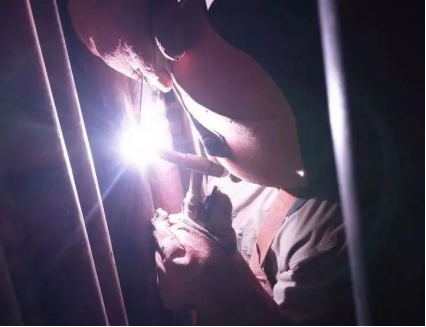
Measures to prevent radiation injury
⑴ Thorium tungsten rods should have special storage equipment, stored in large quantities should be hidden in the iron box, and installed exhaust pipe。
⑵ When the sealed cover is used for welding, the cover body should not be opened in the operation. When the manual operation is performed, the air supply protective helmet or other effective measures must be worn.
(3) Special grinding wheel should be equipped to grind thorium tungsten rod, the grinding machine should be installed with dust removal equipment, the grinding debris on the ground of the grinding machine should be wet cleaned often, and concentrated deep burial treatment.
⑷ Dust mask should be worn when grinding thorium tungsten rod. Wash hands with running water and soap after contact with thorium tungsten rods, and wash clothes and gloves frequently.
⑸ Select reasonable specifications when welding and cutting to avoid excessive burning of thorium tungsten rod.
⑹ As far as possible, use cerium or yttrium tungsten rods instead of thorium tungsten rods, because the latter two are non-radioactive.
welcome to our alibaba shop:
https://czhuarui.en.alibaba.com/
https://topwelding.en.alibaba.com/
Possible causes of arc instability
①The size of the conductive nozzle hole is not suitable
② conductive nozzle wear
③ The welding wire is not stable
④ Network voltage fluctuation
⑤ The distance between the conducting nozzle and the workpiece is too large
⑥ The welding current is too low
⑦ The ground is not solid
⑧ Welding wire diameter is not suitable
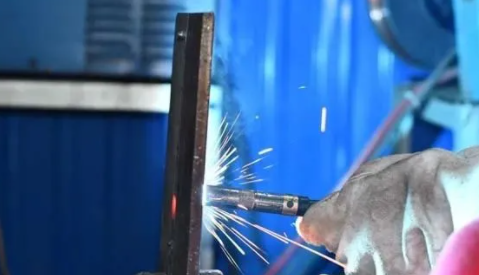
Elimination method
① A conductive nozzle matching the diameter of the welding wire should be used
② The hole in the conducting mouth may become larger, and the conduction is poor
③ The wire winding is too messy, the wire circling is stable, the wire feeding wheel size is appropriate, the pressure roller is too small, the curvature of the guide tube may be too small
④ The primary side voltage should not change too much
⑤ The distance should be 10 to 15 times the diameter of the wire
⑥ Use a current appropriate to the diameter of the wire
⑦ It should be grounded reliably (due to base metal rust, paint and grease, the contact is not good)
⑧ According to the required drop transition process to select the appropriate diameter of the wire.
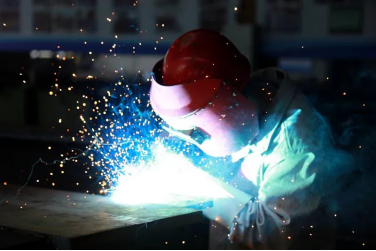
Hazards of electric arc
①Arc light is usually used in electric welding. The content of ultraviolet light in arc light is high, which will affect the cornea. Therefore, you should wear protective goggles when doing electric welding
②To the skin is damaged have rough, desquamate, etc., secondly have certain effect on the germ cells
welcome to our alibaba shop:
https://czhuarui.en.alibaba.com/
https://topwelding.en.alibaba.com/
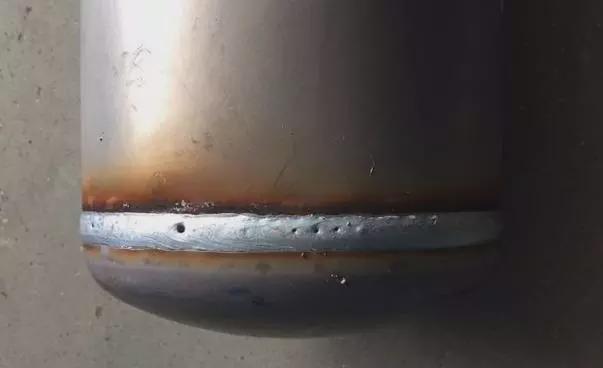
During CO2 welding, the following three types of pores may be produced
(1) CO porosity. The reason is that the welding wire deoxygenation is insufficient, so that a large number of FeO can not be reduced and melted in the metal pool, solidification and C react to generate Fe and CO,CO gas too late to escape, forming pores. Ensure that the welding wire has enough deoxidized elements, strictly control the carbon content of the welding wire, can reduce CO pores.
(2) Nitrogen pores are caused by poor protection of CO2 airflow or low purity of CO2 gas (containing a certain amount of air). When a large amount of nitrogen is melted in the metal pool and the weld metal crystallizes and solidifies, the melting degree of nitrogen in the metal suddenly decreases and there is no time for it to escape, thus forming pores. The factors affecting the poor CO2 protection are too small CO2 gas flow, too fast welding speed, wind in the welding site, etc. Effective measures can be taken to prevent the formation of nitrogen pores.
(3) The formation process of hydrogen stomata is the same as that of nitrogen stomata. The source of hydrogen is related to the rust, moisture, oil and other sundries on the surface of weldment, wire, CO2 gas and water content. Strictly clean up the debris on the surface of welding parts and wires, and use CO2 gas after purification, which can effectively prevent the generation of hydrogen pores.
The causes of air holes are generally: welding process, welding torch is too high; Welding torch nozzle splash plug; The distributor valve is damaged or not installed; Insufficient gas flow and pressure; Gas mismatch; Material water, rust, oil and other sundries; The welding environment is windy; Welding gun aging damage leakage; Personnel skills are insufficient, the above is caused by pores.
Measures to prevent pores:
1.Select appropriate welding parameters according to material characteristics, plate thickness and groove type to maintain the stability of welding process and reduce the generation of pores.
2.Select wire, flux and protective gas suitable for the base metal, clean up oil, rust and oxide and other sundries within 20 ~ 30mm on the groove and both sides before welding, to ensure smooth air path and wire feed structure.
3.According to the actual situation, preheat the workpiece before welding, select the appropriate welding speed, at the end of welding and welding stop, should be slowly withdrawn from the welding pool, so that the pool slowly cooling, so that gas fully escape from the pool, reduce the generation of pores.
welcome to our alibaba shop:
https://czhuarui.en.alibaba.com/
https://topwelding.en.alibaba.com/
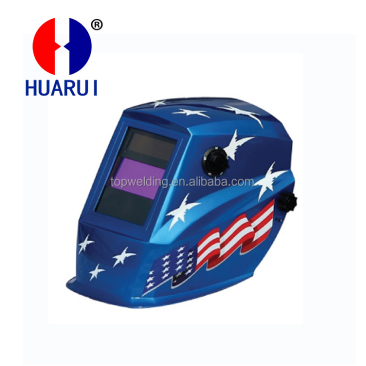
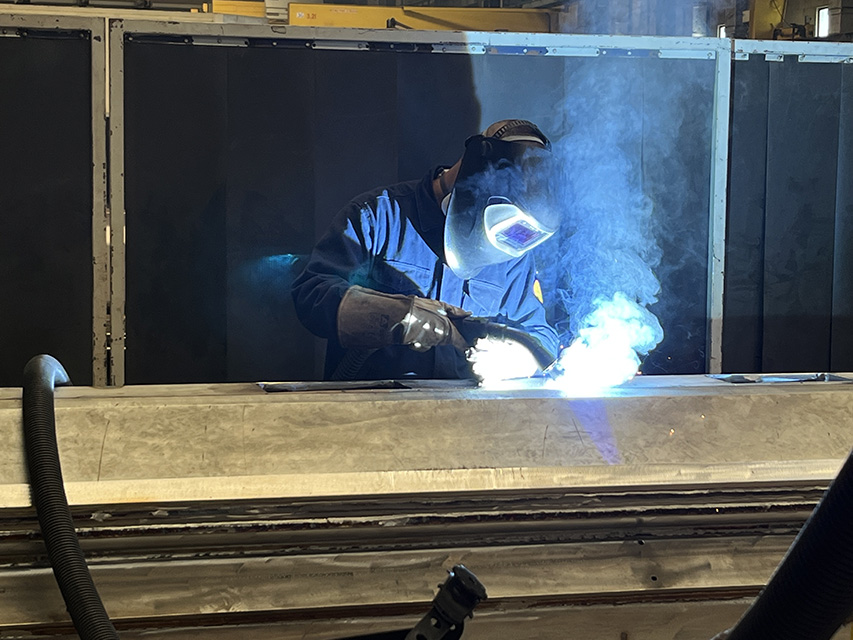
welding is a work of great harm to eyes and face. In the process of welding, a lot of arc radiation, rays, high-frequency electromagnetic field and thermal radiation will be produced. If the construction is carried out without wearing the welding mask, it will cause great harm to itself.
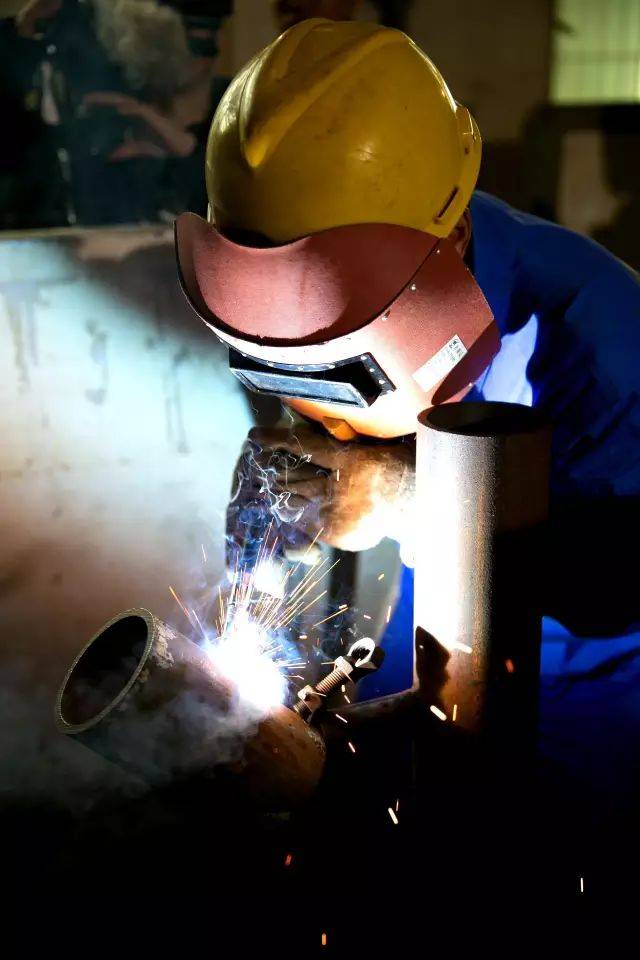
During the welding process, heat source above 1000 degrees, can produce a strong light, ultraviolet and infrared ray, and the people in the eye lens to ray is most sensitive to exposure to X-ray radiation, after a few hours makes bloodshot eyes, long time contact with strong ultraviolet ray, can produce electric ophthalmia and have sore eyes, tears, afraid of light, foreign body sensation, severe cases can cause cataracts.
The mirror set of the welding mask can filter out ultraviolet rays, infrared rays and other rays, so that the welder's eyes are fully protected. At the same time, because of the heat resistance of the material used in the welding mask, the user can be protected from the harm of thermal radiation. In addition, an external protection piece is added in front of the mirror set, which makes the mirror set free from the damage of splashes during welding, and the external protection piece is easy to change, thus improving the service life of the mask.
What is the advantage of automatic welding mask over ordinary welding mask?
1. Free your hands
The mask is not a hand-held mask. It directly frees your left or right hand, allowing you to operate with both hands. In this way, the difficulty of welding is greatly reduced, and the quality of welding is greatly helped, so that the quality of products can also be greatly improved.
2. Protect your eyes
The black glass used in the ordinary mask can only protect the strong light during welding, but cannot protect the infrared and ultraviolet rays which are more harmful to eyes. It is easy to induce electro-optic ophthalmitis if used for a long time. In addition, due to the characteristics of black glass, arc can only rely on experience and feeling, can not see the solder joint. The automatic photochanging welding mask makes use of the characteristics of liquid crystal molecule rotation. When there is no arc light, the light transmittance of the welding mask is high, and it is easy to see the machining parts. When there is arc light, the light transmittance of the welding mask decreases and the vision is protected.
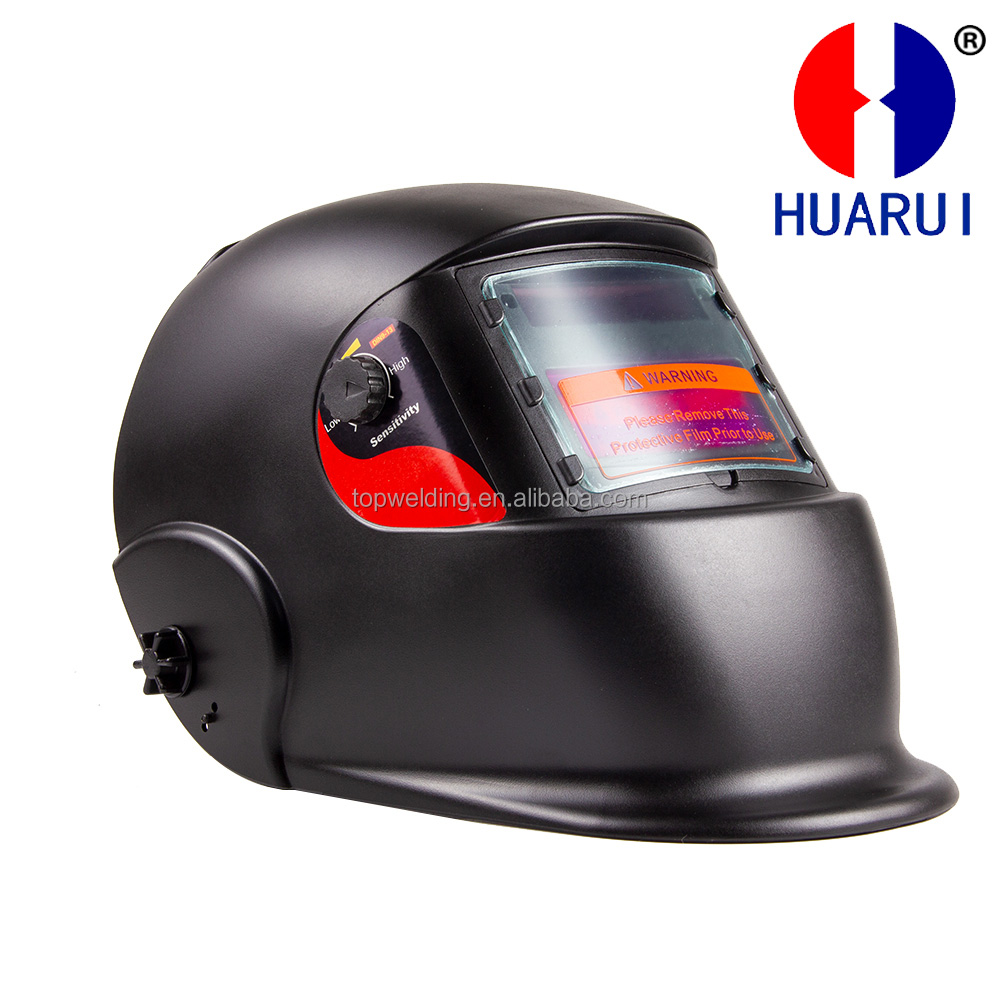
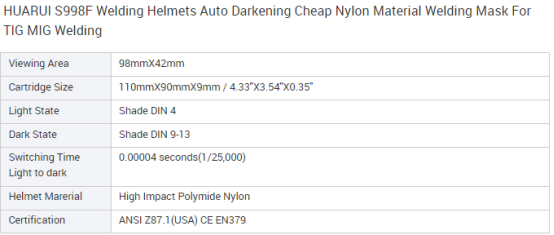
2 Sensor Auto-darkening variable shade 9-13 filter lens.
94mm x 36mm viewing area.
Medium Impact Rating.
Fast Reaction Time.
Adjustable Sensitivity and Delay.
Complies to AS/NZS1337:2010 and AS/NZS1338.1:2012.
1 Year Limited Warranty.
Featuring the industry’s top 1/1/1/1 clarity rating.
welcome to our alibaba shop:
https://czhuarui.en.alibaba.com/
https://topwelding.en.alibaba.com/
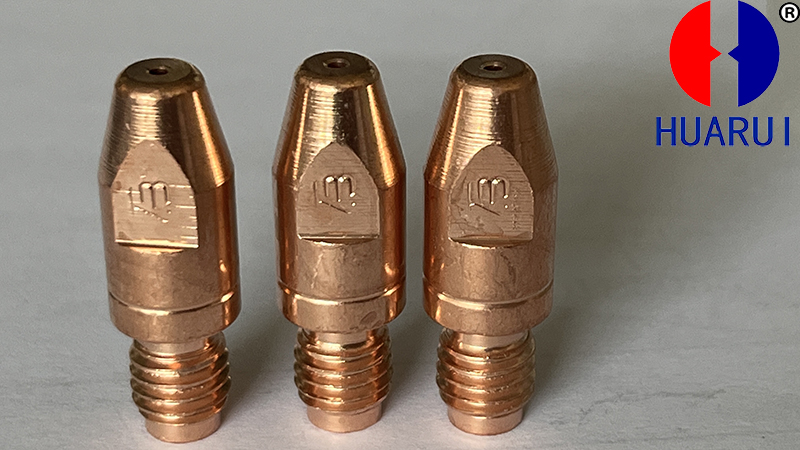
What are the causes and solutions of the serious wear of the mig contact tips?
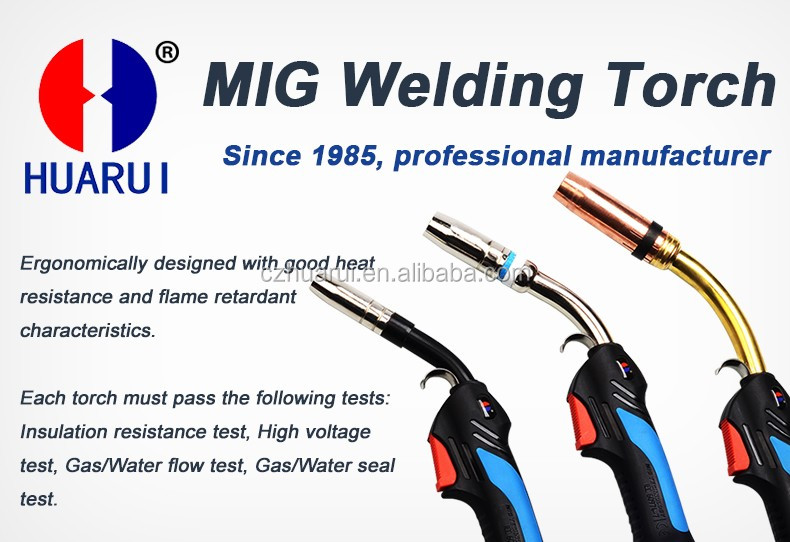
At present, the mig contact tips is frequently replaced. The appearance is: the outlet of the mig contact tips is worn, leading to wire feed deflection, and the actual welding trajectory is offset, that is, the position of the TCP point is offset, resulting in welding defects such as welding deviation or welding leakage.
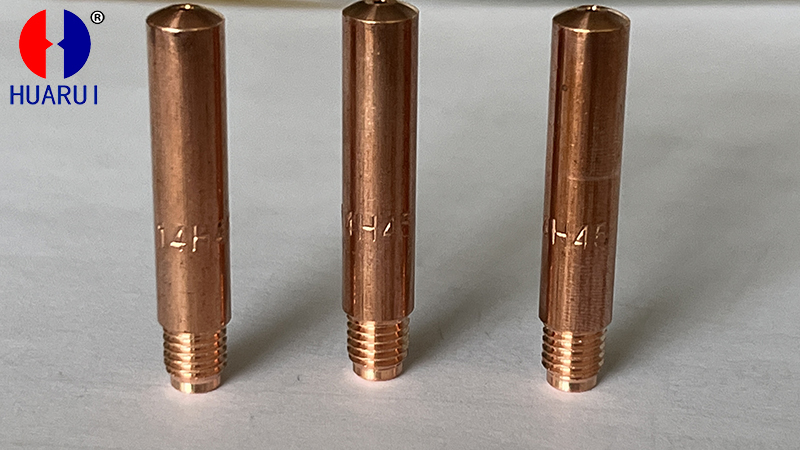
1. mig contact tips failure reason
The wear of the mig contact tips itself comes from the wear at the outlet of the mig contact tips due to the friction of continuous wire feeding at the increasing temperature of the mig contact tips, which often leads to calibration errors and affects the production efficiency during robot welding.
Should try to reduce the temperature of the mig contact tips, including in the mig contact tips composition, mig contact tips structure processing, mig contact tips material:
Brass, copper, chromium zirconium copper and other materials, brass is the most inferior, copper is slightly better, chromium zirconium copper is the best; Ceramic components are even added to the mig contact tips to increase wear resistance.
mig contact tips processing accuracy, due to the accuracy of processing equipment or other problems, the inner hole of the mig contact tips finish and concentricity is not good enough.
2.Wire straightening and surface finish
The wire is often tube or plate, with burrs or ribs, so it may affect the contact between the wire and the mig contact tips, and in welding, the mig contact tips should be stable under the premise of the minimum friction.
The mig contact tips life of dirty welding wire may be only one third of that of clean welding wire.
To determine the quality of welding wire, annealing stress elimination degree of welding wire, performance is how straightening, the test is:
50mm in the front of the welding gun nozzle, whether the wire can automatically bend, bending forward indicates that the wire is too soft, bending back indicates that it is too hard, hard wire on the conductive mouth the most cost;
Secondly, whether the wire feeding hose is bent from the wire feeder to the welding gun will also cause the bend of the welding wire.
3.Arc instability leads to arc backburn
The causes include poor arc, arc instability, wire feeding, workpiece surface cleaning degree, but does not necessarily affect the performance of the mig contact tips itself, at this time the welding fault is roughly related to the characteristics of welding power supply, wire quality, wire feeding effect, wire feeding hose and mig contact tips structure design.
When the conductive point in the welding wire and the mig contact tips is often changed, its life is only half of the stable conductive point;
4.Wire feeding speed or amount of fusion
The smaller the diameter of the mig contact tips, the shorter the service life. For the same 300A current, the amount of filling (melting) per unit time of 1.2 and 1.6 welding wires is basically the same.
The welding wire length of 1.2 is twice that of 1.6, that is to say, the wear amount of the mig contact tips of 1.2 is almost twice that of the mig contact tips of 1.6 with the same current and the same time.
Assume that the conductive tips of 1.6 and 1.2 are both worn by 0.2mm, which is 12.5% of 1.6 and 16.7% of 1.2. The beating range of the welding wire of 1.2 is larger.
Improvement measures
1. the procurement of chromium zirconium copper (CUCRZR),Tellurium copper
2. Alignment of welding wire
3. Conductive mouth must be tightened with pliers, only hand twist is not good, arc instability。
4. The gun cleaning station is normal and sprayed with anti-splashing silicone oil.
5. Generally, small voltage is used.Approximate formula 14+0.04* current, high voltage, high loss.
6. Always clean the wire feed line.
7. The quality of the wire is also decisive
8. The workpiece surface as clean as possible and less oil.
welcome to our alibaba shop:
https://czhuarui.en.alibaba.com/
https://topwelding.en.alibaba.com/
https://www.huarui-cn.com/product_category/3804.html
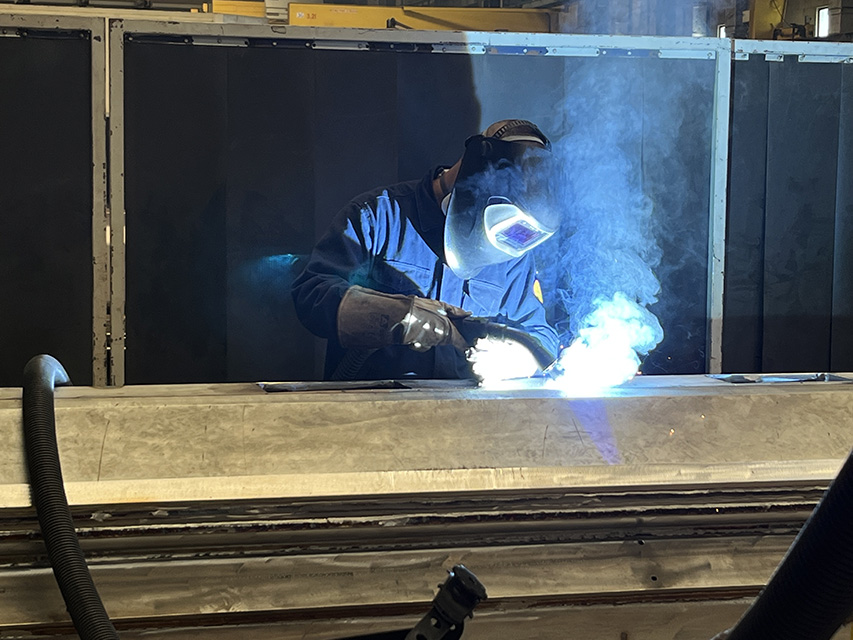
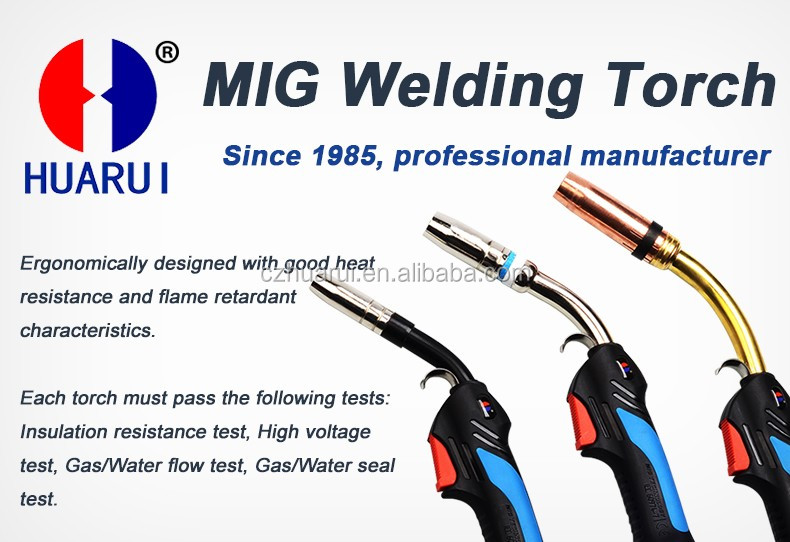
What are the advantages of plasma cutting welding torch?
①The plasma arc is approximately cylindrical, and the divergence Angle is not more than 5°. The size of the heating area is basically independent of the distance between the nozzle and the workpiece. Therefore, the impact of the distance between the nozzle and the workpiece on the weld quality is not as sensitive as that of TIG welding, which is very beneficial for manual operation.
②The plasma arc has high temperature, high ionization degree, and is still stable when the current is as low as 0.1A. It can be used for welding micro precision parts.
③plasma cutting welding torch not only has great penetration capacity, but also has strong hole effect because of its high energy density and high plasma ion current force, which is suitable for single-side welding and double-side forming without padding. The current required for welding the same thickness is small, the heat affected zone of welding is small, and the welding deformation is small. The shape of the plasma cutting welding torch seam is very ideal, like a wine cup, and the influence zone is small.
④Plasma arc with high energy density and fast flow rate has good stability and straightness, so it is suitable for high-speed welding, and the joint alignment requirements are significantly reduced. plasma cutting welding torch seam is narrow and deep, welding speed is fast, so the energy utilization rate is high, welding productivity is significantly improved.
⑤The tungsten pole shrinks inside the water-cooled copper nozzle, and it is impossible to contact with the workpiece, so the tungsten clamping phenomenon of the weld metal can be avoided.
What are the disadvantages of plasma cutting welding torch?
①Welding thickness is limited, generally below 25mm。
②The welding torch and control circuit are complicated, and the service life of the nozzle is very low.
③There are many welding parameters, which require high technical level of welding operators.
What materials can be welded by plasma cutting welding torch?
plasma cutting welding torch can weld almost all metals, such as stainless steel, aluminum and aluminum alloy, titanium and titanium alloy, nickel and nickel alloy, copper and copper alloy, magnesium and magnesium alloy and Monel alloy, etc. But low melting point or high vapor pressure metals, such as zinc, are generally not plasma cutting welding torch. Non - transfer arc can also be used for welding refractory materials, ceramics, etc.
Huarui welding expert
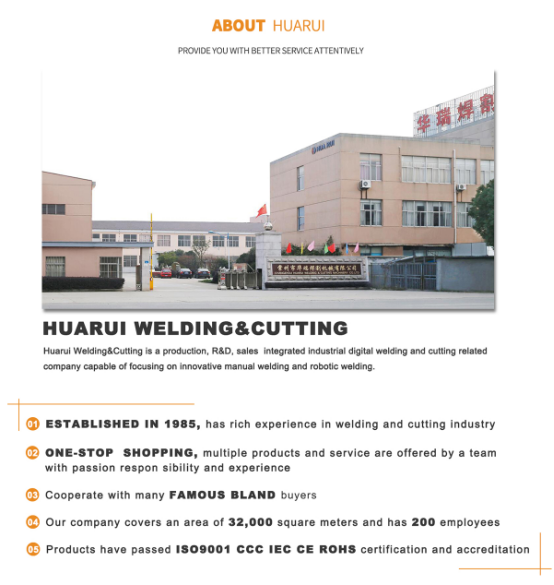
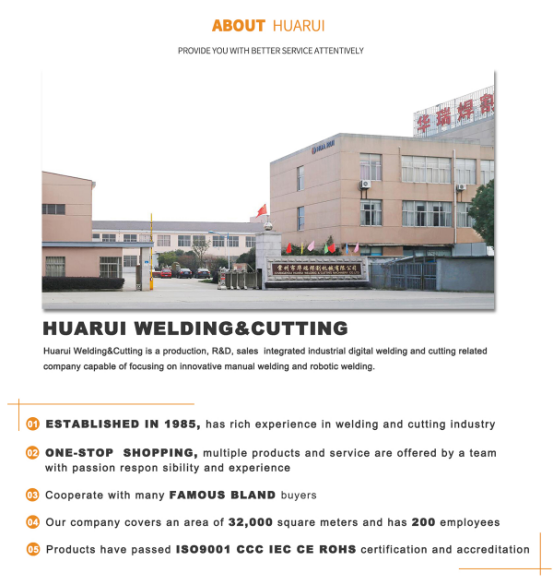
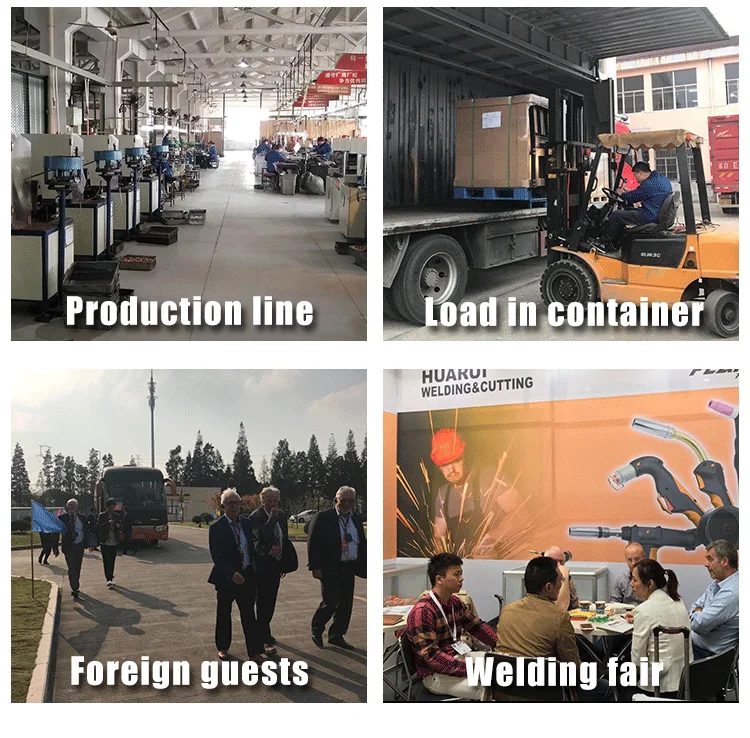
Since the establishment in 1985, HUARUI has kept focusing on heavy industry to make welding & cutting solutions and has become one of the leading manufacturers in welding & cutting by modern manufacturing equipment, special technology, and strict testing systems.
welcome to our alibaba shop:
https://czhuarui.en.alibaba.com/index.html?spm=a2700.shop_cp.88.5
https://topwelding.en.alibaba.com/?spm=a2700.shop_cp.88.16
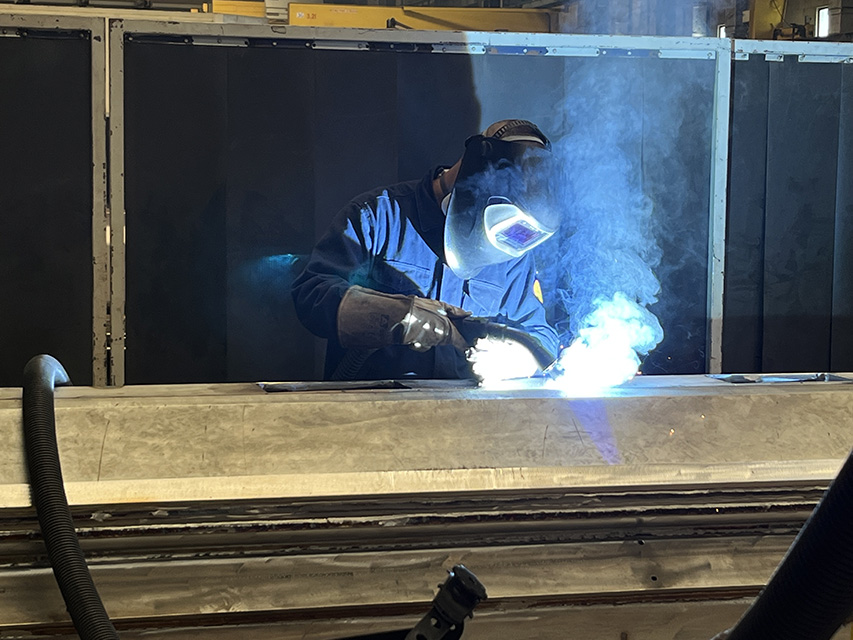
Providing a Cleaner Work Environment
Fume coming out during the welding, Welding fume potentially consists of three ingredients:·
1. Welding consumables (90-95% of fume)
2. Base metals
3. Coatings present on the base material
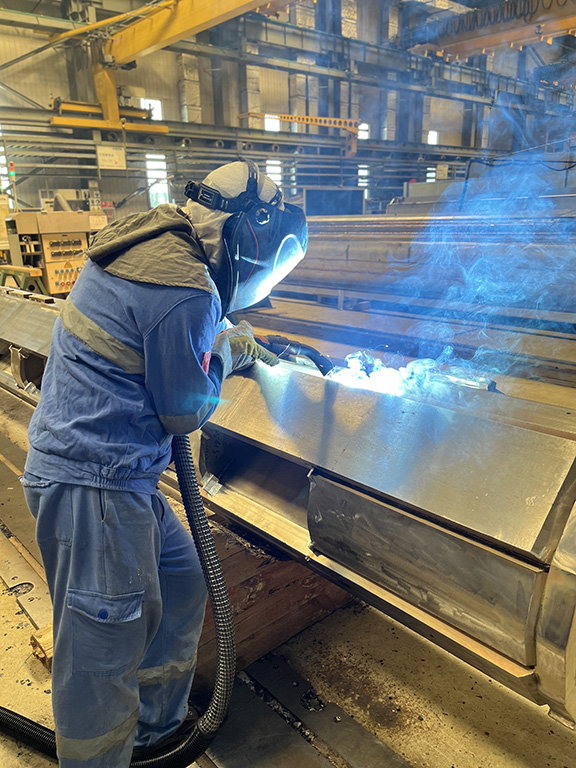
Hazards of gas welding
1. Combustion and explosion accidents caused by welding sparks during welding.
2. Burns and scalds caused by welding flame or candle parts due to improper operation.
3. Improper use of equipment, electric shock accident, and falling accident in the welding process.
4. Hazards to the body and welders in the operation will cause blood, eyes, skin, lungs, and other lesions.
5. Welding welders are often exposed to radiation hazards such as strong light, infrared, ultraviolet, and so on. The X-rays produced by electron beams during welding can affect the health of welders.
6. During the welding process, due to the high temperature, the welding parts of the metal, welding rod, dirt, paint, and other evaporation or combustion, the formation of smoke vapor dust, causing poisoning.
7. The high-frequency electromagnetic field produced in welding can make people dizzy and tired.
In the welding operation, not only wear glasses to protect the eyes, so as not to damage the eyes but also wear a welding mask, etc., welders must do a good job of protective measures, the harm of gas welding really can not be underestimated!
Huarui welding expert
Since the establishment in 1985, HUARUI has kept focusing on heavy industry to make welding & cutting solutions and has become one of the leading manufacturers in welding & cutting by modern manufacturing equipment, special technology, and strict testing systems.
HuaRui Portable Fume Extractor Machine Low Vaccuqm Design
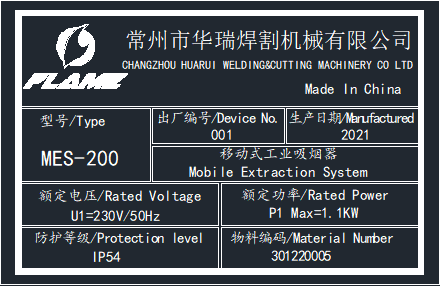
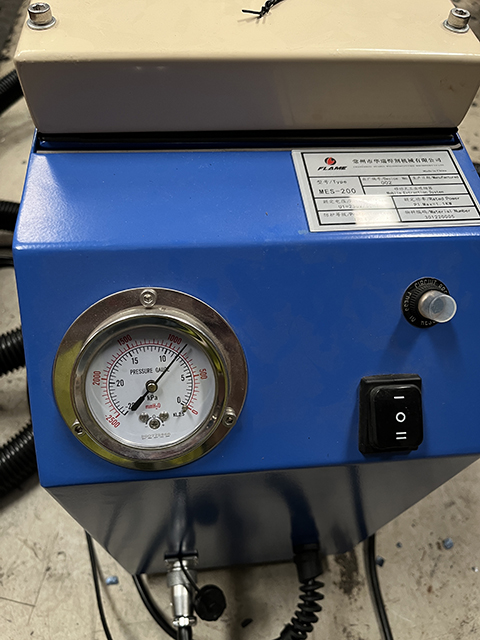
Connection voltage | 115V | 230V |
Drive power | 1.1KW | |
Rated frequency | 50HZ/60HZ | 50HZ |
Filter surface | 0.8 | |
Connector diameter | 70mm | |
Max. vacuum | 19.000Pa | |
Max. air volume flow | 200m³/h | |
Sound pressure level LpA | 70dB(A) | |
Weight | 29.3kg | |
Dimensions (LxWxH) | 546x230x470 | |
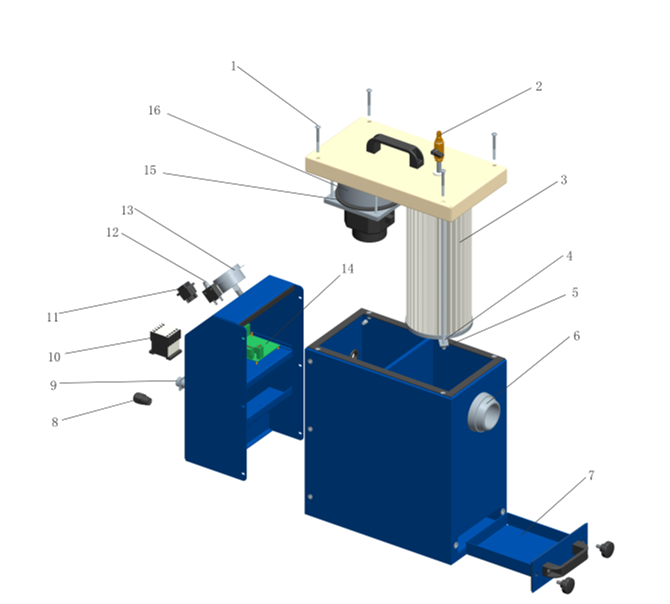
1 Fixation 5 Lock nuts 9 Start-stop clamp connector 13 Manometer
2 Compressed air connection for 6 Extraction hose connection 10 24VDC contactors 14 The Board
Dedusting with the pressure relief valve 7 Dust collecting drawer 11 Start-stop pliers connection 15 Rubber gasket
3 Filter cartridge 8 The main cable secures the Gulen head 12 Overload protector 16 Turbine
4 Fastener
Complet Solutions for Indoor Small Industry Welding
HuaRui Fume Extraction GMAW Welding Torch Air-cooled & Water-cooled
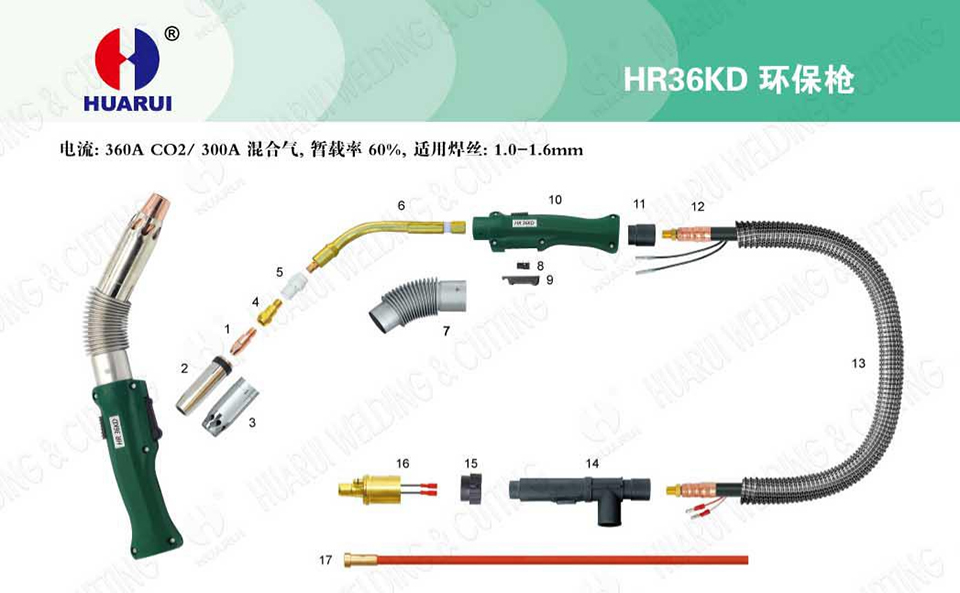
1. There is a control valve to adjust the suction size
2. Provide a variety of air-cooled models to meet different needs
3. conduit material, the cable is guaranteed not to be damaged
4. High-quality consumables are a strong guarantee of long service life
5. Ergonomically designed handle for a firm grip
6. Carbon dioxide torch: Air cooled, 360 amps 100% carbon dioxide.
For the interior of the frame, it is recommended to use 75% argon and 25% carbon dioxide welding seams for a better appearance.
7. 85% argon and 15% carbon dioxide are recommended for thick steel plates or parts (with oxide layer);
8. For those with high-speed pulses, it is recommended to use 90% argon and 10% carbon dioxide.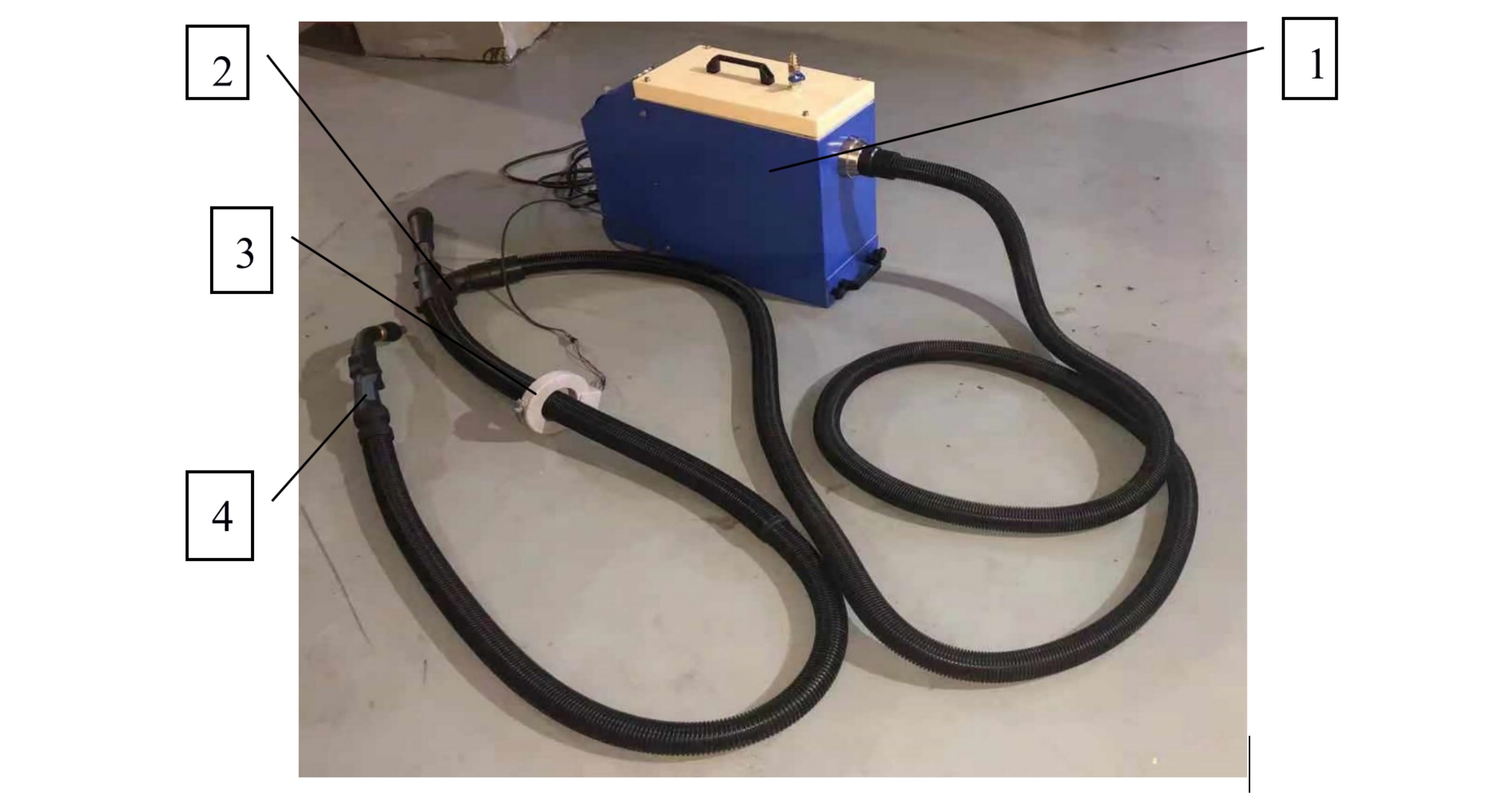

 master@huarui-cn.com
 86-519-86371071
 86-519-86371072



 E-MAIL


